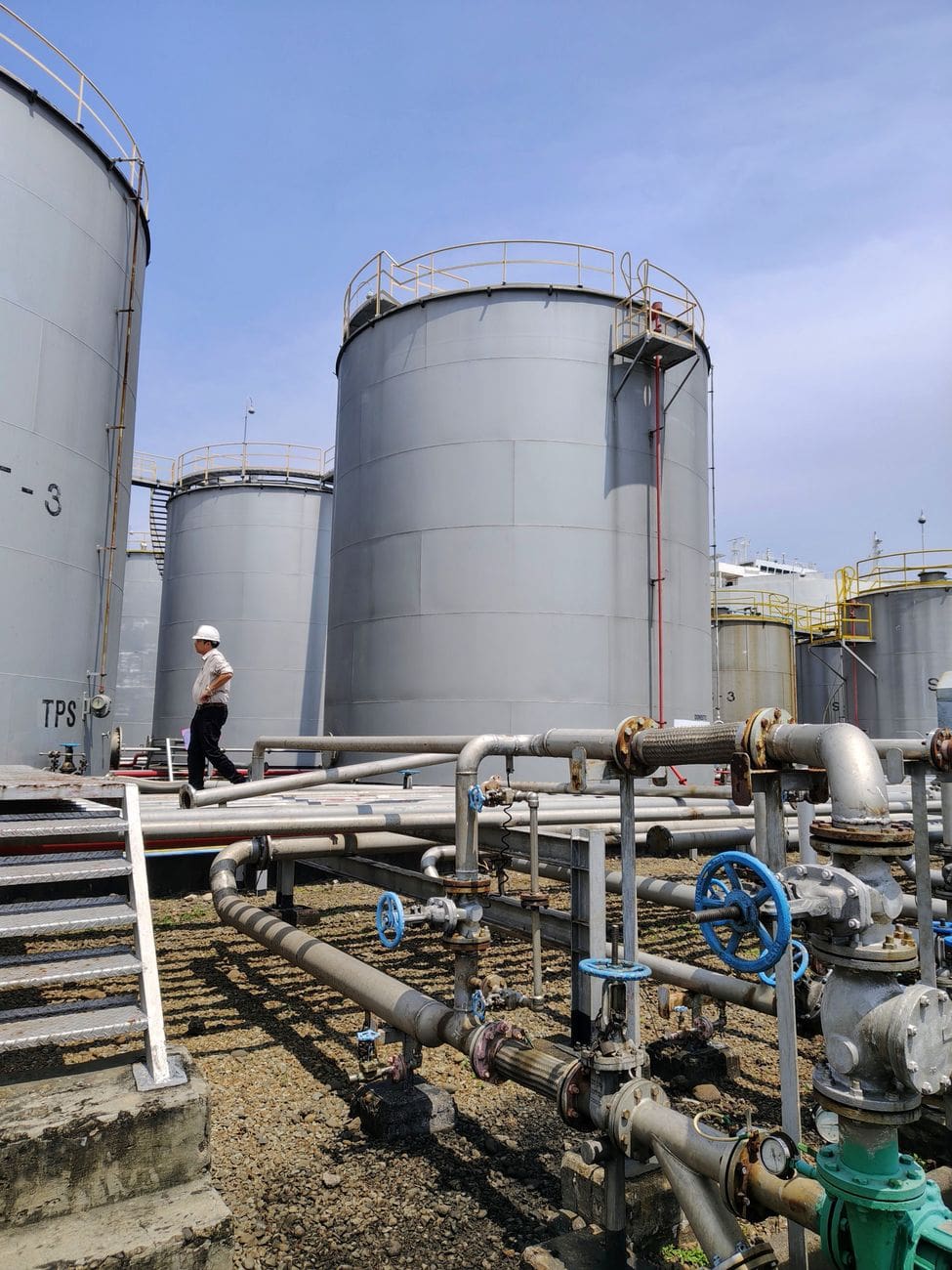
Biofuel insurance isn’t a contractor policy—it’s process-industry coverage. Ethanol, biodiesel, renewable diesel, SAF, and RNG plants combine fire and explosion, equipment breakdown, pollution, and product liability in one account, with business interruption magnifying every loss. This specialty E&S guide covers insuring biofuel producers and contractors across eight states, and why property, BI, and pollution decide most claims.
The Fire That Shut the Plant for a Year
At a Midwest biodiesel plant, a methanol vapor cloud finds an ignition source during a transfer operation. The flash fire is out in minutes, but the damage isn’t: a reactor and part of the process line are destroyed, firewater carrying methanol and feedstock runs off toward a drainage ditch, and the plant is offline. Then the real losses start stacking—fourteen months of lost production while long-lead process equipment is rebuilt, a regulatory cleanup order on the runoff, and a customer whose engines took a bad batch blended just before the shutdown.
Four different exposures, one afternoon: property damage, business interruption, pollution, and product liability. The plant’s coverage answered the first and part of the second—but the equipment-breakdown sub-limit was thin, pollution was written on a form that excluded the runoff, and there was no product-recall response at all. A profitable plant became a solvency question, not because it lacked insurance, but because the program wasn’t built for how biofuel plants actually fail.
Biofuel production is a process industry, and it carries process-industry risk: fire and explosion, equipment breakdown, pollution, product liability, and the business interruption that magnifies all of them. Those are very different exposures from the construction-driven solar and wind trades—and they’re squarely in the surplus lines (E&S) market. This guide breaks down the biofuel producers and contractors we insure, the biofuel-specific risk profile, the coverage lines that matter most, and state-by-state considerations across California, Texas, Alaska, New Mexico, Oklahoma, Pennsylvania, North Dakota, and Nevada. It’s a spoke off our broader alternative energy insurance guide, alongside our solar and wind deep dives.
Quick Summary
- The EIA forecasts record-high 2026 production of fuel ethanol and renewable diesel, with renewable diesel up about 24% and biodiesel up about 41% year over year on high blend mandates and near-record RIN prices.
- The sector spans ethanol, biodiesel, renewable diesel, SAF, and RNG—each a process facility with fire, equipment, and pollution exposure, not a construction site.
- Property, business interruption, equipment breakdown, and pollution are the coverage lines that most often decide a biofuel claim—well beyond baseline GL.
- Off-spec fuel creates real product liability and recall exposure, and tank farms tie the program directly to storage-tank and environmental coverage.
- FCIS Group places biofuel producer and contractor accounts across CA, TX, AK, NM, OK, PA, ND, and NV through specialty markets.
Table of Contents
- The 2026 Biofuel Market: Record Production, Real Volatility
- Types of Biofuel Producers & Contractors We Insure
- The Biofuel-Specific Risk Profile
- Coverage Lines for Biofuel Producers & Contractors
- State-by-State Biofuel Considerations
- Presenting a Biofuel Account to Underwriters
- Growth Outlook for the Biofuel Sector
- Frequently Asked Questions
The 2026 Biofuel Market: Record Production, Real Volatility
Biofuel is having a strong year on paper. The EIA forecasts record-high 2026 production of both fuel ethanol and renewable diesel, driven by high blend mandates, elevated gasoline and diesel prices, and rising plant capacity. Renewable diesel production is projected to climb roughly 24% and biodiesel roughly 41% over 2025, while fuel ethanol edges up about 2% and holds a 10.7% share of motor-gasoline consumption. Higher blending targets have pushed RIN credit prices close to record highs.
The structure of the industry matters for how it’s insured. Fuel ethanol is still the giant—roughly three-quarters of U.S. biofuel capacity, concentrated in the Corn Belt where corn feedstock is grown. Renewable diesel is the growth engine: production expanded from a rounding error in 2020 to hundreds of thousands of barrels per day, and it is chemically equivalent to petroleum diesel, which is why refiners and standalone plants have raced into it. Sustainable aviation fuel (SAF), renewable naphtha, and renewable propane make up a fast-growing “other biofuels” layer, and renewable natural gas (RNG) from landfills, dairies, and wastewater plants is expanding as a parallel category.
But the headline growth hides genuine volatility, and volatility is a risk factor. Biofuel margins swing with feedstock costs, RIN prices, and shifting tax and blending policy—and when the math turns, plants close. Recent years have seen renewable diesel co-processing halted at refineries and several standalone plants shuttered, even as new capacity came online elsewhere. Feedstock availability, especially soybean oil and fats/oils/grease (FOG), is a persistent constraint. For an underwriter, that means a biofuel account isn’t just a fire-and-pollution risk; it’s a business whose financial stability and feedstock strategy factor into the picture.
Types of Biofuel Producers & Contractors We Insure
The biofuel sector spans facility operators and the contractors who build, commission, and service their plants. Both belong in the specialty market, but their exposures weight differently.
Ethanol Producers
Corn and cellulosic ethanol plants combine fermentation and distillation with significant grain-dust explosion and flammable-liquid exposure. They are capital-intensive, run continuously, and are acutely business-interruption sensitive—an outage at a large plant is expensive by the day.
Biodiesel Producers
Biodiesel plants use methanol in transesterification, adding a highly flammable process chemical and glycerin byproduct handling to the fire and pollution picture. Feedstock ranges from soybean oil to animal fats and recycled cooking oil, each with its own storage and spill profile.
Renewable Diesel & SAF Refiners
Renewable diesel and sustainable aviation fuel plants operate at true refinery scale—hydroprocessing under heat and pressure, large tank farms, and high property values. Their risk profile looks more like petroleum refining than agriculture, which is where our oil and gas insurance experience directly applies.
RNG / Biomethane Developers & Operators
Renewable natural gas projects capture and upgrade methane at landfills, dairies, and wastewater plants. They add host-site agreements, gas-upgrading equipment, and pipeline interconnection to the core process risks—and carry site-specific environmental exposure tied to the host facility.
Plant Construction, Commissioning & O&M Contractors
The contractors who build, commission, retrofit, and maintain these plants carry construction and completed-operations exposure layered onto a hazardous process environment—hot work, confined space, and startup risk chief among them.
The Biofuel-Specific Risk Profile
Biofuel accounts land in the E&S market because their claims cluster around process-industry hazards that standard commercial forms weren’t built to carry. The table below summarizes the drivers.
| Exposure | Why It Drives Biofuel Claims | Coverage Response |
|---|---|---|
| Fire & explosion | Ethanol & methanol are highly flammable; ethanol plants add grain-dust explosion risk. | Property with strong limits; process-safety & hot-work controls. |
| Equipment breakdown | Boilers, reactors, distillation columns & pumps fail suddenly—and stop production. | Equipment breakdown (boiler & machinery) with BI. |
| Business interruption | Capital-intensive plants lose money fast when offline; long equipment lead times. | BI with realistic indemnity periods & extra expense. |
| Pollution | Feedstock (FOG), methanol, glycerin, wastewater & fuel spills excluded by GL. | Site & contractors pollution liability + onsite cleanup. |
| Product liability / recall | Off-spec fuel damages engines or fails quality standards. | Products-completed operations + product recall. |
| Storage tanks | AST/UST holding feedstock, methanol & fuel carry damage and leak exposure. | Property + pollution, coordinated with tank regulations. |
| Margin / feedstock volatility | Swings in RIN prices, feedstock & policy can threaten plant solvency. | Financial vetting; realistic values & BI worksheets. |
The takeaway for well-run producers: process safety is the whole ballgame. Documented hot-work permitting, combustible-dust programs, mechanical-integrity and inspection records, fuel-quality testing, and secondary containment don’t just prevent losses—they are exactly what specialty property and pollution underwriters price on. A clean, well-documented risk captures materially better terms.
Biofuel plant or contractor account standard markets won’t touch?
We place property, business interruption, equipment breakdown, pollution, product liability, and bonds—built for how process plants actually fail.
Request a QuoteCoverage Lines for Biofuel Producers & Contractors
Unlike the casualty-driven solar and wind spokes, a biofuel program is anchored by property, business interruption, and equipment breakdown, with pollution and product liability close behind. Here’s the program at a glance.
| Coverage Line | What It Protects Against | Highest Priority For |
|---|---|---|
| Property + Business Interruption | Fire/explosion damage & the lost income that follows | Every producer/facility |
| Equipment Breakdown | Sudden failure of boilers, reactors, pumps & electrical | All process plants |
| Site & Contractors Pollution | Feedstock, methanol, wastewater & fuel spills/releases | Facilities & site contractors |
| GL + Products/Completed Ops | Third-party injury/damage & off-spec fuel liability | Producers & contractors |
| Product Recall | Cost of recalling defective or off-spec fuel | Producers with fuel-quality risk |
| Excess / Umbrella | Limits above primary GL, auto & employer’s liability | Larger facilities & lender-financed plants |
| Workers’ Compensation | Injury from hot work, confined space & process hazards | All plants & contractors |
| Commercial Auto + Cargo | Tanker fleets & feedstock/fuel in transit | Producers hauling feedstock/fuel |
| Cyber Liability | Ransomware & attacks on process-control (OT) systems | Automated facilities |
| Surety Bonding | Construction, RNG host-site & regulatory bonds | Projects & contractors |
1, 2 & 3. Property + Business Interruption + Equipment Breakdown
These three are the spine of a biofuel program. Property covers fire and explosion damage to the plant; business interruption—with a realistic indemnity period that reflects long process-equipment lead times—covers the lost income that usually dwarfs the physical loss; and equipment breakdown (boiler & machinery) covers sudden mechanical or electrical failure that standard property excludes. Get the BI values and indemnity period right, or the largest exposure is the one that’s underinsured.
4. Site & Contractors Pollution Liability
Feedstock, methanol, glycerin, wastewater, and finished fuel all create pollution exposure that GL excludes. Site pollution liability (for the facility) and contractors pollution liability (for site work), paired with onsite cleanup, respond to third-party claims and remediation. Tank farms make this essential—our CPL guide and storage-tank and environmental experience feed directly into these terms.
5 & 6. GL + Products/Completed Ops + Product Recall
GL covers third-party injury and property damage, and its products-completed operations piece responds when off-spec fuel damages engines or fails quality standards. For producers with real fuel-quality risk, dedicated product recall coverage responds to the cost of pulling defective product from the market—an exposure that surprises many first-time buyers.
7, 8 & 9. Excess + Workers’ Comp + Commercial Auto/Cargo
An excess/umbrella layer meets lender and contract limit requirements. Workers’ comp reflects a hazardous process environment—hot work, confined space, and chemical exposure—with multi-state accounts navigating different state rules. Commercial auto plus cargo covers tanker fleets and the feedstock and finished fuel moving to and from the plant.
10 & 11. Cyber + Surety Bonding
Cyber covers ransomware and attacks on the process-control and DCS/SCADA systems that run modern plants. Surety supports construction, regulatory, and—for RNG—host-site and interconnection bonds; we place commercial surety alongside the casualty and property program so the whole submission moves together.
State-by-State Biofuel Considerations
Biofuel activity is shaped by feedstock geography and state fuel policy. Here’s a quick orientation to our eight-state footprint.
| State | Biofuel Profile | Key Underwriting Factors |
|---|---|---|
| North Dakota (ND) | Corn-belt ethanol & biodiesel; strong ag feedstock base | Grain-dust explosion controls; cold-climate process; monopolistic state WC fund |
| California (CA) | Major renewable diesel, RNG (dairy) & SAF market via low-carbon fuel policy | Strict environmental (SWRCB/DTSC); wildfire CAT; high WC costs; large tank farms |
| Texas (TX) | Renewable diesel, RNG & refinery co-processing; feedstock logistics | Refinery-scale property values; hurricane/CAT; process-safety scrutiny |
| Oklahoma (OK) | Ethanol, refining overlap & emerging RNG | Tornado CAT; oil-and-gas process overlap; tank exposure |
| Pennsylvania (PA) | Landfill RNG/biomethane & biodiesel; refinery co-processing history | Host-site agreements; prevailing wage; older-infrastructure retrofits |
| New Mexico (NM) | Dairy RNG & niche biodiesel | Host-site & water considerations; remote logistics; land/tribal jurisdiction |
| Nevada (NV) | RNG & renewable diesel logistics serving the CA market | Water use; transport/tank exposure; federal-land permitting where applicable |
| Alaska (AK) | Niche FOG/fish-oil biodiesel; remote fuel applications | Extreme logistics; cold-climate storage; small-scale, high-transport-cost operations |
For the full multi-sector view, see the alternative energy insurance hub and our oil and gas and environmental/UST capabilities.
Presenting a Biofuel Account to Underwriters
Biofuel submissions live or die on process-safety documentation and realistic values. A capital-intensive, catastrophe-exposed process plant is not a risk any market writes on thin information—but a complete, well-controlled submission opens the specialty property, pollution, and casualty markets that can.
The strongest biofuel submissions include the application, current and expired loss runs, a clear process description (feedstock, chemistry, throughput), and detailed property values with a supportable business-interruption worksheet and indemnity period. Underwriters look hard at process-safety management: hot-work permitting, combustible-dust programs, mechanical-integrity and inspection records, emergency response, and secondary containment. Add fuel-quality testing and specification controls for the product-liability side, tank inventories and construction details for the property and pollution side, and—given margin volatility—financial statements and feedstock strategy.
From there, we match the account to the right specialty property, pollution, and casualty markets, negotiate manuscript terms where standard forms fall short—adequate equipment-breakdown limits, pollution wording that actually covers firewater runoff and feedstock releases, sensible product-recall response—and assemble the program so the lines fit together. The plant-fire scenario at the top of this guide is exactly what happens when property, equipment breakdown, pollution, and product coverage are bought in isolation. As a solo specialty producer, the broker who takes your submission is the one who works it start to finish.
Building a biofuel submission? Let’s get it market-ready.
Send the application, loss runs, process description, and values—we’ll structure property, BI, equipment breakdown, pollution, and the full program.
Talk to a SpecialistGrowth Outlook for the Biofuel Sector
The near-term production picture is genuinely strong—record ethanol and renewable diesel output in 2026, high blend mandates, and a fast-growing renewable diesel, SAF, and RNG layer point to a sector with real momentum. Demand for low-carbon and drop-in fuels, particularly renewable diesel and sustainable aviation fuel, is expected to keep expanding through the end of the decade.
But the durable story for insurance is that biofuel is, and will remain, a process industry with margin volatility. Plants will keep being built, expanded, retrofitted for new feedstocks, and—when the economics turn—idled or sold. That churn guarantees ongoing construction, commissioning, and O&M work, and it keeps financial stability, feedstock strategy, and process safety at the center of every underwriting conversation. As facilities scale and lenders demand bankable coverage, the producers and contractors that treat property protection, business-interruption planning, and process safety as core to the business—not paperwork—will be the ones best positioned to ride the growth without a single bad afternoon threatening the whole enterprise.
Key Takeaways
- The EIA forecasts record 2026 ethanol and renewable diesel output—renewable diesel up ~24%, biodiesel up ~41% year over year.
- Biofuel is a process industry: property, business interruption, and equipment breakdown anchor the program, not GL.
- Fire and explosion (ethanol, methanol, grain dust) is the leading severe-loss driver—process safety is what underwriters price on.
- Pollution and product liability (off-spec fuel, feedstock and firewater runoff) are core, not optional, coverages.
- Tank farms tie biofuel programs directly to storage-tank and environmental coverage; margin volatility puts financial stability in play.
- FCIS Group places biofuel producer and contractor accounts across CA, TX, AK, NM, OK, PA, ND, and NV.
Frequently Asked Questions
1. What insurance does a biofuel production facility need?
A biofuel plant typically needs commercial property with business interruption, equipment breakdown (boiler & machinery), contractors/site pollution liability with onsite cleanup, general liability with products coverage for fuel quality, an excess/umbrella layer, workers’ compensation, commercial auto and cargo, cyber liability for process-control systems, and surety bonds. Property, business interruption, and pollution are usually the largest exposures.
2. Why is fire and explosion the defining risk at biofuel plants?
Biofuel production handles flammable and combustible materials—ethanol and methanol are highly flammable, and ethanol plants also face grain-dust explosion risk. Combined with boilers, reactors, and distillation under heat and pressure, that makes fire and explosion the leading cause of severe property and business-interruption losses, which is why underwriters focus heavily on process safety and hot-work controls.
3. Do biofuel producers need environmental / pollution insurance?
Yes. Feedstock (fats, oils, and grease), methanol, glycerin, wastewater, and finished fuel all create spill and release exposure that standard general liability excludes. Site pollution liability and contractors pollution liability, paired with onsite cleanup, respond to third-party claims and remediation—essential for plants with tank farms and process wastewater.
4. What is equipment breakdown coverage and why does a biofuel plant need it?
Equipment breakdown (boiler & machinery) covers sudden mechanical or electrical failure of boilers, reactors, pumps, distillation columns, and electrical systems—and the business interruption that follows. Standard property policies exclude most breakdown, so at a capital-intensive process plant where downtime is extremely costly, this coverage is a core part of the program, not an add-on.
5. Is product liability important for biofuel producers?
Very. Off-spec fuel can damage engines, void warranties, or fail regulatory quality standards, exposing the producer to product liability and potential recall costs. Products-completed operations coverage within the GL, and in some cases dedicated product recall coverage, respond to these claims. Fuel-quality controls and testing documentation strongly influence terms.
6. How are storage tanks covered at a biofuel facility?
Above-ground and underground storage tanks holding feedstock, methanol, and finished fuel carry both physical-damage and pollution exposure. Tank coverage is coordinated across property and site pollution liability, with attention to regulatory requirements, leak detection, and secondary containment—an area where our storage-tank and environmental experience is directly relevant.
7. Do RNG and biomethane projects have different insurance needs?
Yes. Renewable natural gas projects at landfills, dairies, and wastewater plants add host-site agreements, gas-upgrading equipment, pipeline interconnection, and site-specific environmental exposures on top of the core process risks. These accounts blend property, equipment breakdown, pollution, and contractual liability, and often require manuscript terms.
8. Why do biofuel accounts go to the surplus lines (E&S) market?
Biofuel plants combine process-industry fire and explosion hazard, high-value equipment, pollution exposure, product liability, and margin volatility in one account—an exposure set standard admitted markets rarely write. Surplus lines carriers underwrite these hard-to-place risks with flexible property, casualty, and pollution forms and manuscript endorsements.
9. Which states have the most biofuel production activity?
Ethanol is concentrated in the Corn Belt, with North Dakota active among our footprint. California is a major renewable diesel, RNG, and SAF market driven by its low-carbon fuel program, and Texas, Oklahoma, Pennsylvania, and New Mexico all host renewable diesel, RNG, or biodiesel activity. We place biofuel accounts across all eight states in our footprint.
10. How fast can FCIS Group quote a biofuel account?
A straightforward contractor or smaller facility account can often see indications within a few business days once we have the application, loss runs, and process description. Full production facilities requiring property, equipment breakdown, and pollution placements through specialty markets may take one to two weeks. Complete underwriting data—including process safety and fuel-quality documentation—speeds everything.
Let’s place your biofuel account.
Ethanol, biodiesel, renewable diesel, SAF, and RNG producers and contractors across CA, TX, AK, NM, OK, PA, ND, and NV. Talk directly with a specialty broker who works your submission start to finish.
Contact Steve McClure Request a QuoteCrescenta Valley Insurance / FCIS Group | CA License 0G58010 | Call: [PHONE]
Sources & Further Reading
| Source | Topic |
|---|---|
| U.S. Energy Information Administration | Record 2026 ethanol & renewable diesel production; RIN prices |
| U.S. Energy Information Administration | U.S. biofuels production capacity & mix |
| Biomass Magazine | EIA raises 2026 renewable diesel forecast |
| Rystad Energy | U.S. biofuels & SAF growth outlook to 2035 |
| USDA Economic Research Service | U.S. bioenergy & biofuel production statistics |
| farmdoc daily (U. of Illinois) | Renewable diesel production-capacity estimates |
| U.S. Energy Information Administration | Renewable diesel capacity surpasses biodiesel |
| Advanced Biofuels USA | Capacity & policy reference (RFS, RINs, tax credits) |
| Brown & Brown | 2026 energy & infrastructure insurance outlook |
| Risk & Insurance | Renewable energy underwriting trends |
This article is for informational purposes only and does not constitute an offer of insurance or a policy. Coverage is subject to underwriting, policy terms, conditions, and exclusions. CVI, CA License 0G58010.

- Directional Drilling Contractor Insurance: HDD & Fiber Guide
- Pennsylvania Welding Contractor Insurance for Foundry, Mill & Structural Work.
- How to get Agriculture Environmental Insurance?
- Asbestos Abatement Contractor Insurance: California C-22 Guide
- Battery Storage (BESS) Insurance


Leave a Reply