Standard markets decline most alternative energy risks—so where does coverage come from? This specialty E&S guide breaks down insuring solar, wind, biofuel, tidal, and transition-fuel contractors across CA, TX, AK, NM, OK, PA, ND, and NV. Learn the nine coverage lines every program needs, the underwriting drivers behind hard-to-place accounts, and why the 2026 clean-energy boom is reshaping demand.
The Deal That Almost Didn’t Close
A solar EPC contractor in the Central Valley wins a 40-megawatt utility-scale bid, mobilizes crews, and then hits a wall the week before financial close: the project’s lender requires evidence of contractors pollution coverage and a performance bond, the developer wants proof of professional liability for the design-build scope, and the standard carrier that wrote the firm’s old GL policy has just non-renewed because “solar isn’t in appetite.”
The work is real, the revenue is real, and the coverage gap is very real. This is the everyday reality of the alternative energy build-out—projects being financed and constructed at record pace, but with a risk profile that most admitted, standard markets simply won’t touch. That is precisely the territory a specialty surplus lines (E&S) brokerage is built for.
This guide walks through the alternative energy sectors we place, the risk profile that pushes these accounts into the E&S market, the nine coverage lines that make up a complete program, and state-by-state considerations across California, Texas, Alaska, New Mexico, Oklahoma, Pennsylvania, North Dakota, and Nevada—plus where the market is headed.
Quick Summary
- The U.S. is adding clean-energy capacity at a record clip—developers plan roughly 86 GW of new utility-scale capacity in 2026, with solar, wind, and battery storage accounting for the overwhelming majority.
- Alternative energy risks—solar, wind, biofuel, tidal/riparian, and transition-fuel systems—typically fall outside standard-market appetite and belong in the surplus lines (E&S) market.
- A complete program combines nine lines: GL, contractors pollution (CPL), professional/E&O, onsite cleanup, excess/umbrella, workers’ comp, commercial auto, cyber, and surety bonding.
- Catastrophe exposure (hail, wildfire, convective storm), pollution conditions, and contractor error are the underwriting drivers that make these accounts hard to place.
- FCIS Group places alternative energy accounts across CA, TX, AK, NM, OK, PA, ND, and NV through wholesale specialty markets.
Table of Contents
- The Alternative Energy Boom: Why Now Is the Moment
- What Counts as “Alternative Energy”? The Sectors We Place
- The Risk Profile: Why Standard Markets Struggle
- Core Coverage Lines for Alternative Energy Contractors
- State-by-State Considerations (CA, TX, AK, NM, OK, PA, ND, NV)
- How Placement Works With a Specialty Wholesale Broker
- Growth Outlook: Where the Market Is Headed
- Frequently Asked Questions
The Alternative Energy Boom: Why Now Is the Moment
The scale of the current build-out is difficult to overstate. Power-plant developers plan to add roughly 86 gigawatts of new utility-scale generating capacity to the U.S. grid in 2026—a record if realized, and a sharp jump from the 53 GW added in 2025, which was itself the largest single-year installation since 2002. Solar makes up more than half of the planned 2026 additions, followed by battery storage and wind. In practical terms, renewables plus storage now account for the vast majority of all new capacity coming online, while net additions from fossil fuels and nuclear have flattened to near zero.
The financial picture tracks the physical one. Estimates for the U.S. renewable energy market vary by methodology, but multiple 2026 analyses place it well into the tens—or hundreds—of billions of dollars, with compound annual growth rates generally forecast in the high-single to low-double digits through the mid-2030s. Federal incentives, falling equipment costs, corporate clean-power procurement, and state-level clean-electricity mandates are the common threads across every forecast.
Battery energy storage systems (BESS) deserve special mention. Storage has been the fastest-growing category on the grid, with utility-scale battery capacity increasing by more than half year over year and pairing routinely with new solar and wind projects. That growth introduces its own risk set—thermal runaway and fire exposure, specialized commissioning, and evolving code and setback requirements—that underwriters are still actively pricing.
Two states dominate the deployment map. California continues to lead on installed capacity and policy ambition, driven by its 100% clean-electricity target, while Texas is a powerhouse on both wind and utility-scale solar, backed by abundant resource and heavy corporate power-purchase-agreement activity. But the growth is broad—and every megawatt installed is a megawatt of new liability, property value, and professional exposure that has to be insured.
What Counts as “Alternative Energy”? The Sectors We Place
“Alternative energy” is a broad umbrella, and each sector under it carries a distinct risk signature. The insureds range just as widely—residential and commercial installers, utility-scale EPC contractors, developers and asset owners, operations-and-maintenance (O&M) providers, and the specialty subcontractors (electrical, civil, crane, marine) who support them. Where a firm sits in that chain shapes which coverage lines carry the most weight.
Solar System Installation & Solar Arrays
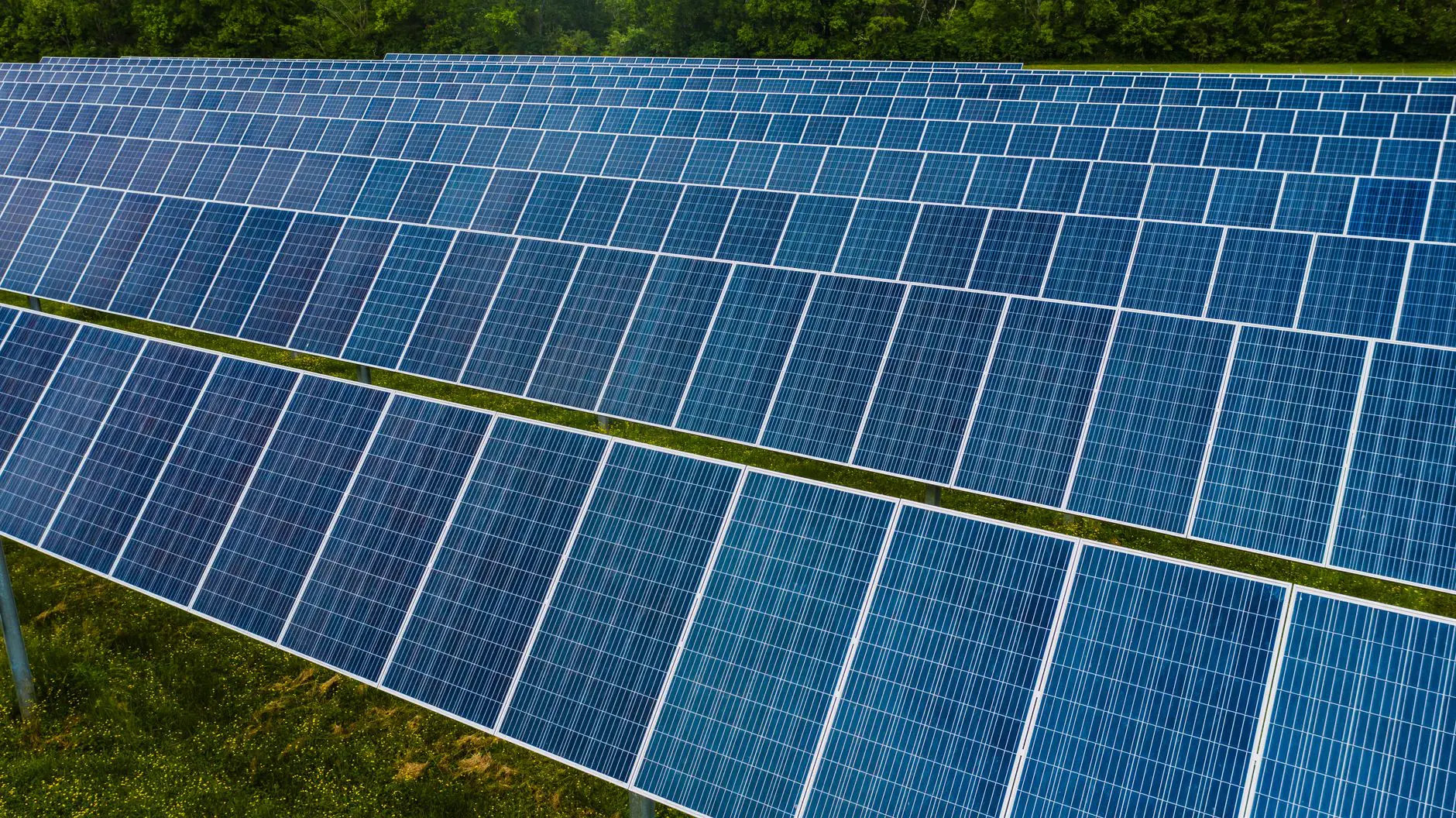
From residential and commercial rooftop installers to utility-scale array EPC contractors and solar carport builders, solar is the single largest driver of new capacity. Exposures range from rooftop fall and property-damage risk and electrical hazards to energy-yield and design guarantees and—for ground-mount arrays—catastrophe exposure from hail and severe convective storms. Solar carport and canopy work also introduces structural and vehicle-adjacent exposures.
Wind Farms
Onshore and offshore wind involve heavy civil construction, tall-tower erection, crane operations, and complex mechanical and electrical work at height. A large fleet of turbines built in the 2000s is now approaching the end of its operational life, driving a wave of repowering—retrofits, partial rebuilds, and full demolition-and-replacement projects with their own unique risk exposure. Contractor error at scale is a genuine underwriting concern given the limited pool of experienced turbine crews.
Biofuel Production
Biodiesel, renewable diesel, ethanol, and renewable natural gas (RNG) facilities blend process-industry hazards with pollution and environmental exposure. Feedstock handling, flammable and combustible liquids, tank and pipeline systems, and wastewater all create first-party cleanup and third-party pollution exposure that a general liability policy will exclude. RNG projects tied to landfills, dairies, and wastewater plants add host-site agreements, gas-upgrading equipment, and pipeline interconnection liability. These accounts draw directly on our oil, gas, and environmental placement experience.
Tidal & Riparian (Hydrokinetic) Systems
Tidal, wave, and in-river (riparian) hydrokinetic systems are an emerging frontier—still largely pilot-stage in U.S. waters, with notable activity in Alaska’s Cook Inlet and other coastal and riverine sites. These projects combine marine and in-water construction, specialized equipment, permitting complexity, and environmental sensitivity, which means bespoke placement rather than off-the-shelf forms.
Alternative Coal/Oil & Transition-Fuel Systems
The energy transition isn’t only greenfield renewables. Waste-to-energy plants, landfill-gas and coal-mine-methane capture, coal gasification and integrated-gasification systems, refined-coal operations, and carbon-capture-enhanced oil recovery all sit at the intersection of legacy fuels and emerging technology. These accounts frequently carry significant environmental and pollution exposure and benefit directly from our established oil, gas, and environmental placement experience.
The Risk Profile: Why Standard Markets Struggle
Standard admitted carriers decline most alternative energy accounts because the risk combines several hazard categories that no single standard form was designed to absorb. The table below summarizes the drivers—and how each pushes an account into the E&S market.
| Risk Driver | Why It’s a Problem | How It’s Managed |
|---|---|---|
| Catastrophe exposure | Hail has produced some of the sector’s largest solar losses; wildfire, flood, and hurricane threaten renewable assets. | CAT modeling, site selection, panel-stow systems; hail sub-limits or percentage deductibles. |
| Long equipment lead times | Transformers, inverters, switchgear, and turbine parts can take months to replace, extending downtime. | Careful indemnity periods and business-interruption limit adequacy. |
| Contractor error | Bigger turbines, complex panels, and high-capacity batteries outpace the supply of experienced crews. | Professional/E&O coverage and well-drafted GL; documented QA/QC. |
| Pollution & environmental | Spills, feedstock releases, disturbed soil, and battery/transformer leaks are excluded by standard GL. | Contractors pollution liability plus first-party onsite cleanup. |
| Cyber / grid connectivity | Inverters, SCADA, and interconnection software make assets networked—and therefore targets. | Dedicated cyber liability covering response, BI, and third-party exposure. |
On the encouraging side, new insurer capacity is entering the renewable energy market and property conditions have been softening in 2026, with digital quoting speeding up underwriting for solar, wind, and battery risks. But capturing those better terms depends on presenting a well-controlled, well-documented risk—which is where broker expertise earns its keep.
Have an alternative energy account standard markets won’t touch?
We specialize in hard-to-place E&S risks across solar, wind, biofuel, and transition-fuel systems.
Request a QuoteCore Coverage Lines for Alternative Energy Contractors
A complete alternative energy insurance program is built from nine coverage lines. Not every account needs all nine, but understanding how they fit together is the difference between a bankable program and a coverage gap that surfaces at the worst possible moment. Here’s the program at a glance:
| Coverage Line | What It Protects Against | Highest Priority For |
|---|---|---|
| General Liability | Third-party bodily injury & property damage from operations/completed work | Every account |
| Contractors Pollution (CPL) | Pollution conditions caused by your work—spills, releases, disturbed media | Biofuel, battery, ground-disturbing site work |
| Professional / E&O | Design errors, load/yield miscalculations, production guarantees | EPC & design-build firms |
| Onsite Cleanup | First-party remediation on the insured’s own/leased site | Biofuel plants, battery installations |
| Excess / Umbrella | Limits above primary GL, auto & employer’s liability | Utility-scale & lender-financed projects |
| Workers’ Compensation | Employee injury; work at height, electrical, heavy equipment | All contractors; multi-state fleets |
| Commercial Auto | Fleet liability & equipment-in-transit between remote sites | Mobile crews & haulers |
| Cyber Liability | Ransomware, OT attacks, data breach on networked assets | Operators & O&M providers |
| Surety Bonding | Bid, performance, payment & decommissioning/reclamation bonds | Public & leased-land projects |
1 & 2. General Liability + Contractors Pollution Liability
GL is the foundation—third-party bodily injury and property damage from your operations and completed work. But because GL excludes pollution, CPL is essential for site work: it covers third-party bodily injury, property damage, and cleanup costs arising from a pollution condition your operations cause. It’s a must-have for biofuel, battery, and any ground-disturbing solar or wind construction. See our contractors pollution liability guide.
3 & 4. Professional / E&O + Onsite Cleanup
GL doesn’t cover professional services, so E&O responds to design, load/yield, and specification errors on EPC and design-build scopes. Where CPL is largely third-party and off-site, first-party onsite cleanup responds to remediation on the insured’s own project or leased site—biofuel plants and battery installations often need both. Our environmental and UST experience feeds directly into these terms.
5 & 6. Excess/Umbrella + Workers’ Compensation
Utility-scale developers, lenders, and public agencies routinely require limits well above primary GL—an excess/umbrella layer satisfies those contractual demands (often $5M, $10M or more). Workers’ comp is heavily driven by classification and experience modification, and multi-state accounts must navigate sharply different state environments (California differs markedly from Texas, North Dakota, or Nevada).
7 & 8. Commercial Auto + Cyber Liability
Fleets moving between remote sites create meaningful auto exposure—hired-and-non-owned, higher limits, and equipment-in-transit all factor in. Cyber covers ransomware, OT attacks, and data breach on networked energy assets; capacity has stayed comparatively stable, but AI-driven threats and war exclusions are increasingly important terms to review.
9. Surety Bonding
Public and utility-scale projects commonly require bid, performance, and payment bonds, and wind, solar, and battery sites on public or leased land often require decommissioning or reclamation bonds. We place commercial surety alongside the casualty program so the whole submission moves together.
State-by-State Considerations (CA, TX, AK, NM, OK, PA, ND, NV)
Every state carries its own catastrophe profile, environmental regime, and labor environment. Here’s a quick orientation to the eight states where we’re most active on alternative energy.
| State | Market Strength | Key Underwriting Factors |
|---|---|---|
| California (CA) | Nation’s clean-energy leader; 100% clean-electricity target; heavy solar-plus-storage | Wildfire CAT; strict SWRCB/DTSC oversight; among the highest WC costs; prevailing wage on public work |
| Texas (TX) | Leader in both wind and utility-scale solar; strong corporate PPAs | Hail & severe-convective-storm belt—some of the sector’s largest solar losses; mitigation is decisive |
| Alaska (AK) | Diesel-displacement microgrids; emerging tidal/hydrokinetic pilots (Cook Inlet) | Remote logistics; cold-climate construction; transport cost, seasonality, and access |
| New Mexico (NM) | Strong solar & wind resource; active oil-and-gas transition (Permian) | Land use; tribal jurisdiction; Public Regulation Commission requirements |
| Oklahoma (OK) | Major wind state with significant oil-and-gas overlap | Tornado-alley CAT; localized induced-seismicity considerations |
| Pennsylvania (PA) | Growing solar; Marcellus overlap; biofuel & landfill-gas/RNG | Prevailing-wage and organized-labor considerations on public/commercial work |
| North Dakota (ND) | Per-capita wind leader; strong ethanol/biofuel base; Bakken overlap | Cold-climate construction; flaring-to-power projects; monopolistic state WC fund |
| Nevada (NV) | Solar, geothermal & lithium/battery activity, much on federal (BLM) land | Federal-land permitting; reclamation bonding; low humidity favors solar performance |
For our deeper energy and extraction experience in several of these markets, see our oil and gas insurance capabilities.
How Placement Works With a Specialty Wholesale Broker
Placing an alternative energy account well is a function of two things: knowing the markets, and presenting the risk in the way underwriters need to see it. As a specialty surplus lines producer with access to leading wholesale markets, our process is built to do both.
It starts with the submission. Complete underwriting data up front—application, current and expired loss runs, project schedules, scope of work, subcontractor practices, and any engineering or catastrophe-mitigation documentation—directly determines both how fast a quote comes back and how favorable the terms are. A well-controlled risk that’s clearly documented captures the softening property conditions and new capacity entering the market; a thin submission gets penalized.
From there, we match the account to the right markets, negotiate manuscript terms where standard forms fall short, and assemble the full program so the pieces fit together instead of leaving gaps at the seams. That coordination matters more than it sounds: a common failure mode is buying each line in isolation and discovering, mid-claim, that a pollution condition falls between the GL exclusion and a CPL definition, or that an excess layer doesn’t follow form over the underlying professional coverage. For multi-state accounts, we coordinate the differing state requirements—WC rules, surplus-lines-tax obligations, and contractual limit demands—into a single coherent program. As a solo specialty producer, the broker who takes your submission is the one who works it start to finish. Explore our broader specialty contractor insurance capabilities to see how alternative energy fits our wider hard-to-place appetite.
Building a submission? Let’s get it market-ready.
Send us the application, loss runs, and project schedule—we’ll structure the full program.
Talk to a SpecialistGrowth Outlook: Where the Market Is Headed
Every credible forecast points the same direction: sustained, multi-year growth. Renewables and storage are projected to account for the overwhelming majority of net new U.S. generating capacity through the rest of the decade, with solar leading, battery storage surging, and wind—particularly repowering and select offshore projects—adding steadily. The renewable energy insurance market is expanding in step, moving from a niche specialty line toward a mainstream risk-transfer category as deployment, weather-loss experience, and lender requirements all push demand upward.
For contractors and developers, that means opportunity paired with a hardening set of expectations. Lenders and offtakers increasingly require bankable coverage as a condition of financing, catastrophe-exposed regions demand documented mitigation, and the growing complexity of turbines, panels, and battery systems raises the premium on quality risk management. The winners will be the firms that treat insurance not as a box to check but as part of how they make their projects financeable.
Key Takeaways
- 2026 is a record year for U.S. clean-energy capacity—roughly 86 GW planned, led by solar, storage, and wind.
- Alternative energy risks belong in the surplus lines (E&S) market; standard carriers routinely decline them.
- A complete program spans nine lines—GL, CPL, E&O, onsite cleanup, excess, WC, auto, cyber, and bonding.
- Catastrophe exposure, pollution conditions, and contractor error are the core underwriting drivers.
- Documented mitigation and complete submissions capture the best terms in a softening 2026 property market.
- FCIS Group places these accounts across CA, TX, AK, NM, OK, PA, ND, and NV.
Frequently Asked Questions
1. Why do alternative energy contractors need surplus lines (E&S) insurance?
Standard admitted markets often decline these risks because they combine construction hazards, pollution exposure, professional design liability, catastrophe-exposed assets, and evolving technology in one account. Surplus lines carriers underwrite hard-to-place risks with flexible forms and manuscript endorsements a standard package can’t match.
2. What is contractors pollution liability (CPL) and why does a solar or biofuel contractor need it?
CPL covers third-party bodily injury, property damage, and cleanup costs arising from a pollution condition caused by your operations—fuel and hydraulic spills, biodiesel or feedstock releases, disturbed contaminated soil, or a battery/transformer leak. Standard GL excludes pollution, so CPL closes that gap for site work.
3. Does general liability cover faulty design or engineering errors?
No. GL responds to bodily injury and property damage but generally excludes losses from professional services such as system design, load calculations, energy-yield estimates, or engineering. Those exposures are addressed by professional liability / E&O coverage.
4. How do hail and severe weather affect solar insurance in 2026?
Hail has produced some of the largest losses in utility-scale solar, especially across the Midwest and Texas storm belt. Carriers scrutinize catastrophe modeling, site selection, and mitigation such as panel-stow systems, and may apply hail sub-limits or percentage deductibles. Strong risk controls directly improve pricing.
5. What coverage lines make up a complete alternative energy insurance program?
A typical program combines general liability, contractors pollution liability, professional/E&O, onsite cleanup, an excess/umbrella layer, workers’ comp, commercial auto, cyber, and surety bonding. The exact mix depends on whether the insured is an installer, EPC contractor, developer/owner, or O&M provider.
6. Do alternative energy projects require surety bonds?
Frequently. Public and utility-scale projects commonly require bid, performance, and payment bonds, and decommissioning or reclamation bonds are often mandated for wind, solar, and battery sites on public or leased land.
7. Which states does FCIS Group write alternative energy insurance in?
We place these risks across multiple states, with active appetite in California, Texas, Alaska, New Mexico, Oklahoma, Pennsylvania, North Dakota, and Nevada—each with its own catastrophe profile, environmental regime, and workers’ comp environment.
8. Why does an alternative energy contractor need cyber insurance?
Modern energy assets rely on inverters, SCADA, remote monitoring, and interconnection software. That connectivity creates ransomware, operational-technology, and data-breach exposure. Cyber liability covers response costs, business interruption, and third-party liability that standard property and GL policies exclude.
9. What is onsite cleanup coverage and how is it different from CPL?
CPL primarily protects against third-party claims and off-site conditions caused by your work. First-party onsite cleanup responds to remediation of a pollution condition on the insured’s own project or owned/leased site. Many accounts—especially biofuel plants and battery installations—need both.
10. How long does it take to get an alternative energy insurance quote?
A straightforward installer account can often see indications within a few business days once we have the application, loss runs, and project schedule. Complex EPC, developer, or multi-state accounts requiring wholesale submissions and manuscript terms may take one to two weeks. Complete data up front speeds everything.
Let’s place your alternative energy account.
Solar, wind, biofuel, tidal, and transition-fuel risks across CA, TX, AK, NM, OK, PA, ND, and NV. Talk directly with a specialty broker who works your submission start to finish.
Contact Steve McClure Request a QuoteCrescenta Valley Insurance / FCIS Group | CA License 0G58010 | Call: [PHONE]
Sources & Further Reading
| Source | Topic |
|---|---|
| U.S. Energy Information Administration | Record new generating capacity in 2026 (86 GW) |
| U.S. Energy Information Administration | Solar leads generation growth (Short-Term Energy Outlook) |
| Electrek | 99%+ of new U.S. capacity in 2026 is solar, wind & storage |
| Enerdata | EIA forecasts record 86 GW of capacity additions in 2026 |
| Mordor Intelligence | U.S. renewable energy market size & forecast |
| Mordor Intelligence | Renewable energy insurance market outlook |
| GM Insights | Renewable energy insurance market analysis |
| POWER Magazine | U.S. renewables outlook 2026: key risks |
| Brown & Brown | 2026 energy & infrastructure insurance market outlook |
| Risk & Insurance | Renewable energy sector coverage & underwriting trends |
This article is for informational purposes only and does not constitute an offer of insurance or a policy. Coverage is subject to underwriting, policy terms, conditions, and exclusions. CVI Insurance, CA License 0G58010.


- Wind Farm Insurance: Turbine & Repowering Contractor Coverage
- Solar Contractor Insurance: Installer & EPC Coverage (2026)
- Alternative Energy Insurance for Contractors (2026 Guide)
- Structural Steel Contractor Insurance
- California Idle Well Bonding: AB 1167 & AB 2461 for Operators


Leave a Reply