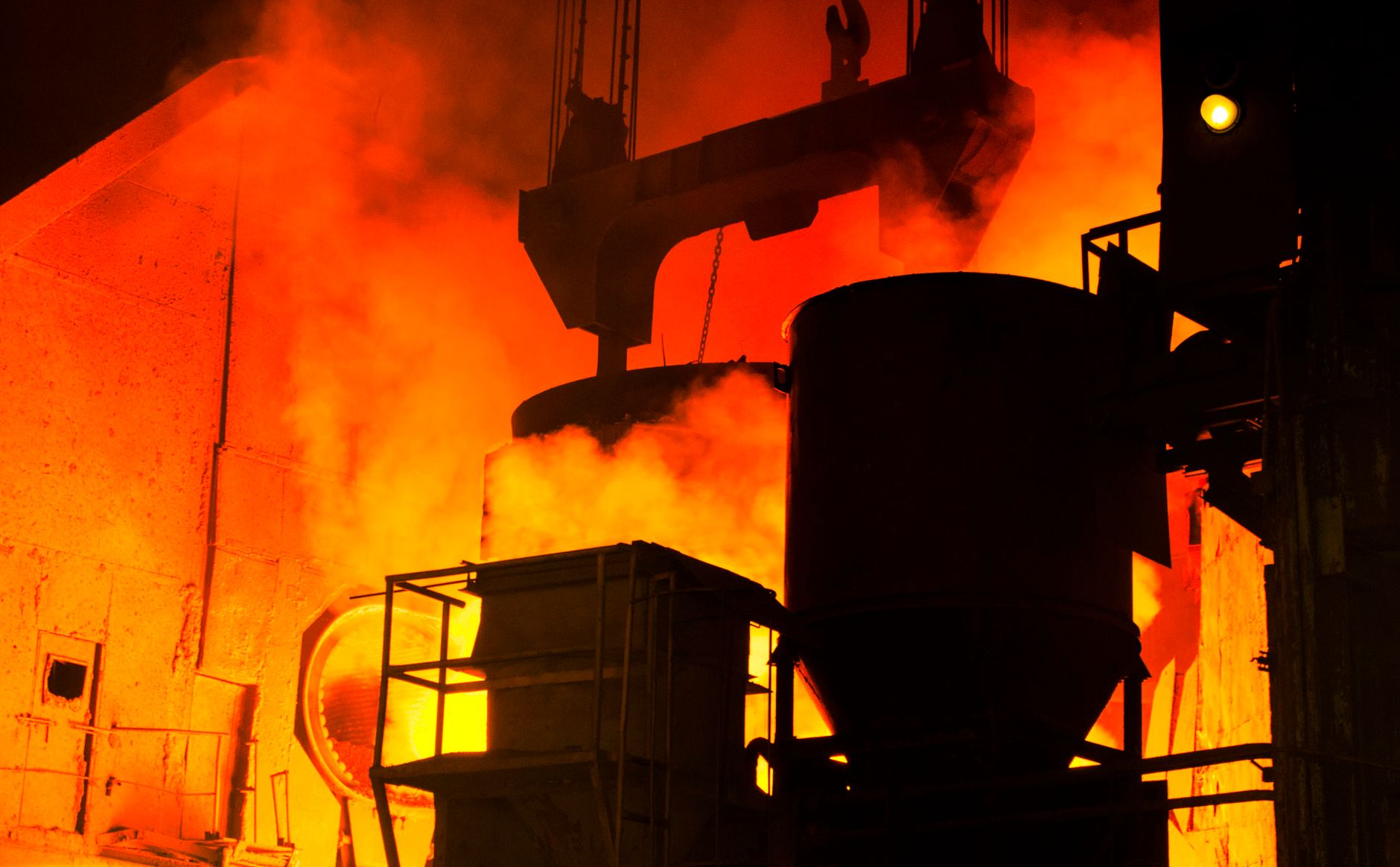
Pennsylvania welding contractors working inside foundries, steel mills, and on structural projects face tough insurance demands and hidden coverage gaps. This guide covers typical owner requirements, care-custody-control exclusions on repaired equipment, hot work warranties, Section 303(b) indemnity, Act 72 misclassification rules, and Philadelphia licensing, plus how excess and surplus lines markets place these hard-to-insure risks.
The job was supposed to take one shift. A three-man mobile welding crew out of the Lehigh Valley was called into a gray-iron foundry on a Friday to repair a cracked trunnion mount on a 10-ton pouring ladle. They preheated, welded, ground it flush, and the maintenance supervisor signed the ticket. Eleven days later, on the second pour of a Tuesday morning, the repair let go. The ladle tipped, molten iron hit a damp floor, and the steam explosion that followed wrecked a molding line, injured a foundry employee, and shut the plant down for nine days.
Three claims landed on the welding contractor at once: the foundry’s property insurer subrogating for the ladle, the molding line, and the lost production; a bodily injury suit from the injured worker, who could not sue his own employer but could sue the outside contractor; and a tender from the foundry demanding defense and indemnity under the contract the welder had signed without reading. Their general liability carrier paid part of it and denied the rest, citing the care, custody, and control exclusion and the “your work” exclusion for the ladle itself. That uninsured portion is what put the company out of business.
The story is a composite, but every piece of it is real. In Pennsylvania, welding contractors who do third-party work inside foundries, steel mills, and industrial plants, or who weld structural steel on commercial and public projects, face some of the toughest insurance requirements in the building trades. They also face some of the worst coverage gaps. This guide covers both.
Key Takeaways
- Pennsylvania has no statewide commercial contractor license. Owner contracts, prequalification platforms, and project specs set the insurance bar for welders, and those bars are high.
- Foundries and steel mills usually require $1M/$2M GL, $5M–$10M+ umbrella, $1M employer’s liability, contractor’s pollution, and primary/non-contributory additional insured status with waiver of subrogation.
- The biggest uncovered exposure in repair welding is damage to the customer’s equipment you are working on. A standard CGL excludes it. You need care, custody, and control coverage or an installation/bailee floater.
- Section 303(b) of the Pennsylvania Workers’ Compensation Act means the owner can only pull you into an injury claim through a written indemnity clause. Your GL “insured contract” coverage has to match that clause.
- Many admitted carriers exclude hot work, welding on tanks, or foundry and mill operations entirely. Excess and surplus lines markets write these risks every day.
Who This Guide Is For: Pennsylvania Welding Work
Pennsylvania’s industrial base makes welding a much broader trade here than in most states. The Pennsylvania Foundries Association reports more than 120 metalcasting facilities in the state, supporting more than 30,000 direct and indirect jobs, and ranks Pennsylvania as the fourth-largest metalcasting state by production capacity. Add the Mon Valley steel works, specialty steel and forging plants across the state, power generation, Marcellus Shale gas infrastructure, and one of the largest bridge inventories in the country, and you have a lot of contracted welding.
The operations we see most often in Pennsylvania welding submissions:
- Industrial maintenance and repair welding: ladles, furnace shells, cupolas, shakeout equipment, sand system hoppers, crane runways, and conveyors inside foundries, steel mills, and forges.
- Structural steel welding: field welding moment connections, embeds, decking, and miscellaneous metals on commercial, institutional, and industrial buildings.
- Bridge and heavy civil welding: PennDOT and turnpike work, girder repair, bearing replacement, and retrofits governed by bridge welding codes.
- Shop fabrication with field installation, where products-completed operations exposure is often larger than the premises exposure.
- Mobile and rig welding: truck-mounted welders serving farms, quarries, municipalities, and energy sites.
- Pipe and pressure welding: process piping, boiler repair, and gas gathering and compression facilities.
Each of these is underwritten differently. A shop fabricator and a contractor doing hot work on a live ladle line might both call themselves “welders,” but carriers see them as very different risks.
This guide goes deep on Pennsylvania and on work inside other people’s plants. For the full breakdown of welding types and coverage lines across all nine states we write, start with our welding contractors insurance guide. For pipeline and well site welding in the Marcellus, see welding insurance for oil and gas.
Why Welding Contractors Are Hard to Insure
Underwriters price welding risks around four exposures. If you know them, you can see why your quote came back high or why your renewal came with a new exclusion.
1. Fire and hot work
Welding and cutting are among the leading causes of industrial fires. One spark that lands in dust, insulation, or a hidden void can burn a building, and the property owner’s insurer will subrogate against the contractor. Carriers respond with hot work warranties requiring written permits, a fire watch during and after the work (NFPA 51B practice), and extinguishers on site. If you break a warranty, the carrier can deny the claim.
2. Completed operations and structural failure
A bad weld can hold for months or years before it fails. Pennsylvania’s statute of repose for improvements to real property is 12 years, so structural welding exposure lasts long after the job closes. Carriers watch how much of your revenue comes from load-bearing, fracture-critical, or pressure-retaining work.
3. Damage to the thing you are welding on
This is the exposure that sinks repair welders. The standard CGL form excludes property damage to personal property in your care, custody, or control, to “that particular part” of real property you are working on, and to property that has to be repaired because your work was faulty. For a contractor repairing a $400,000 ladle or a furnace shell, the most likely claim is the one the policy is built to exclude.
4. Fume, chemical, and pollution exposure
Welding fume contains manganese, and stainless and alloy work generates hexavalent chromium, which OSHA regulates under its own standards. Cutting or welding on older Pennsylvania steel and bridges can release lead from coatings. Nearly every CGL carries a total pollution exclusion, so fume and lead claims have to be covered by a contractor’s pollution liability policy.
Welding is a “risks other agents won’t touch” trade
Most standard markets either decline welding contractors who work in foundries and mills or bury exclusions in the policy that remove the exact work you do. We place these risks with specialty and E&S carriers that write hot work, industrial maintenance, and structural welding.
Call (818) 974-8117 Email steve@cvins.comThird-Party Work in Foundries and Steel Mills
Working as an outside contractor inside a foundry, steel mill, or forge is different from working on a construction site. You are a guest in someone else’s hazardous industrial operation. The owner controls the environment, but you are responsible for your own work and your own employees. The owner’s contract usually shifts as much risk as possible onto you.
The hazards underwriters worry about
- Molten metal and steam explosions. Molten metal that contacts moisture expands violently. A repair on a ladle, launder, or furnace that fails in service is a catastrophic loss scenario.
- Confined spaces. Work inside ladles, hoppers, baghouses, and furnace shells falls under OSHA’s permit-required confined space rules.
- Energized equipment. Cranes, conveyors, shakeouts, and mixers require lockout/tagout coordinated with plant maintenance.
- Overhead crane operations. Crane runway and rail repair means working at height while the plant may still be running cranes nearby.
- Respirable crystalline silica. Foundry sand is a major silica source, and contractors in the plant share that exposure.
- Heat stress and fume on top of the welder’s own fume exposure.
Federal OSHA covers private-sector employers in Pennsylvania, and foundries and mills fall under OSHA’s National Emphasis Program for Primary Metal Industries (CPL 03-00-018). That means more inspections. When an inspector finds a contractor’s crew in the plant, the contractor’s program gets reviewed as well.
What foundry and mill owners require
Requirements vary by owner, but the insurance exhibits we see in Pennsylvania foundry, mill, and heavy industrial maintenance contracts usually look like this:
| Coverage | Typical Minimum | What to Watch |
|---|---|---|
| Commercial General Liability | $1M per occurrence / $2M aggregate; per-project aggregate often required | No hot work, foundry, or “designated operations” exclusion; products-completed ops included |
| Umbrella / Excess | $5M–$10M; large integrated mills may require $10M–$25M | Must follow form over GL, auto, and EL; additional insured status must carry through |
| Workers’ Compensation | Statutory (Pennsylvania) | Waiver of subrogation endorsement; all-states coverage if crews travel |
| Employer’s Liability | $1M / $1M / $1M | Critical in Pennsylvania because of Section 303(b) (see below) |
| Commercial Auto | $1M combined single limit | Rig trucks with welders count as mobile equipment or autos, so schedule them correctly |
| Contractor’s Pollution Liability | $1M–$5M | Occurrence form preferred; covers fume, lead, and silica disturbance |
| Property in Care, Custody & Control | Often unstated, but you need it | Installation floater, bailee coverage, or a CCC buyback on the GL |
| Additional Insured | Owner, parent, and affiliates | Ongoing and completed ops (CG 20 10 + CG 20 37 or equivalent), primary and non-contributory |
Prequalification platforms
Most larger foundries, steel producers, and energy operators manage contractors through ISNetworld, Avetta, or Veriforce. These platforms review your certificates, endorsements, safety program, OSHA logs, and experience modification rate before you set foot in the plant. A certificate is not enough. The reviewers want the actual additional insured, primary/non-contributory, and waiver endorsements, and they will flag you “red” or “yellow” if the wording is wrong. Many contractors lose a bid because of a missing endorsement, not because of price.
Other structural and industrial welding environments
The same third-party contractor issues come up outside foundries:
- Integrated and specialty steel mills: larger limits, more contract pages, and often a contractor safety orientation that must be completed before badging.
- Power plants and refineries: pressure-vessel and piping welding that brings in boiler and ASME code requirements and higher umbrella limits.
- Marcellus Shale gas facilities: compressor stations and gathering lines, where operators usually require pollution coverage. Our Marcellus Shale insurance guide covers those operator requirements.
- Water and wastewater plants, and municipal tanks: welding on tanks and vessels, which some GL forms exclude outright.
Structural Welding Insurance Requirements
On commercial construction, the general contractor’s subcontract sets the insurance requirements. For structural welding in Pennsylvania, those usually include:
- GL of $1M/$2M with a per-project aggregate, and completed operations additional insured coverage that lasts through the statute of repose or a stated number of years after completion.
- An umbrella of $2M–$5M on typical commercial work, and higher on hospitals, high-rises, and industrial projects.
- No exclusions for residential or multifamily work if the project is a mixed-use or apartment building. This comes up often in Philadelphia and Pittsburgh.
- Enrollment in an OCIP or CCIP (wrap-up) on large projects. You still need your own policy for off-site work and completed operations after the wrap ends.
Code and qualification requirements that affect underwriting
Carriers ask how your welders are qualified because it predicts your completed operations losses. On structural work you will usually be welding to AWS D1.1 (structural steel). Bridge work for PennDOT and other agencies follows AWS D1.5, with its own welder, procedure, and inspection requirements. If you can show AISC certification, documented welding procedure specifications (WPS/PQR), current welder qualification records, and third-party inspection, you will get a better response from underwriters.
Public works
Pennsylvania public projects add the Steel Products Procurement Act, which requires US-made steel products on public works, along with prevailing wage requirements and payment and performance bonds. Welders who also fabricate should understand that supplying non-compliant steel creates a contract dispute exposure. That is not a GL claim, so manage it through your contracts and your supply chain.
Philadelphia
Philadelphia licenses contractors through the Department of Licenses and Inspections. Contractors must keep workers’ compensation, general liability, and motor vehicle liability insurance on file. According to the City, contractors working on new construction need at least $1,000,000 in general liability coverage, and complete demolition requires $2,000,000.
For a related look at erection-side exposures such as crane picks and on-hook liability, see our structural steel contractor insurance guide.
The Welding Contractor Insurance Stack
General liability
This is the core policy and the one to read line by line. Look for hot work exclusions or warranties, designated operations exclusions (foundry, mill, refinery, tank, or pipeline), residential exclusions, action-over exclusions, and subcontractor warranties that void coverage if a subcontractor’s certificate is missing. Make sure the “insured contract” definition has not been narrowed, because that is how the GL responds to the indemnity you signed.
Workers’ compensation and employer’s liability
Pennsylvania requires workers’ compensation for almost every employer with even one employee. Pennsylvania uses its own classification system through the Pennsylvania Compensation Rating Bureau (PCRB), not NCCI, so class codes you have used in other states will not carry over. Welding classification in Pennsylvania depends on context, such as shop fabrication, field erection, or maintenance at a customer’s plant, so review your payroll allocation carefully. Carry at least $1M/$1M/$1M in employer’s liability. The reason is explained under contract risk transfer.
Umbrella / excess liability
Foundry and mill contracts drive the umbrella limit. Heavy-industrial welding umbrellas are a specialty market, and buying high limits usually means a primary umbrella layer with excess layers above it.
Care, custody & control / installation floater
This fills the gap described earlier. Depending on the market, coverage can come from a CCC endorsement on the GL, an installation floater for materials and work in progress, or a bailee form for customer equipment brought into your shop for repair.
Contractor’s pollution liability
This covers welding fume, lead disturbance, silica, and fire-suppression runoff. Many owners now require it outright. It can often be bundled with the GL in a combined form.
Inland marine: tools, equipment, and welding rigs
This covers welding machines, plasma cutters, positioners, rigging, and the equipment built onto rig trucks. Schedule anything high-value, and confirm that coverage applies at customer sites and in transit.
Commercial auto
Rig trucks, service bodies, and trailers carrying compressed gas cylinders. Some carriers treat hauling oxygen and acetylene cylinders as a hazmat underwriting issue, so disclose it.
Professional liability
You need this if you write welding procedures for others, design repair details, do delegated connection design, or provide weld inspection or consulting. A GL policy does not cover design errors.
Pennsylvania Licensing, Workers’ Comp, and Act 72
No statewide commercial license
Pennsylvania does not license commercial welding or general contractors at the state level. Residential work falls under the Home Improvement Consumer Protection Act (HICPA), which requires registration with the Attorney General’s office and, per the AG, at least $50,000 of personal injury liability and $50,000 of property damage coverage. HICPA does not apply to commercial properties, so a welder doing only industrial and commercial work is outside it. If you also do residential railings, stairs, or structural repairs on homes, you need to register. Local licensing, such as Philadelphia’s L&I contractor license, applies separately.
Act 72 – Construction Workplace Misclassification Act
Many welding contractors use 1099 welders to cover peak work. Pennsylvania’s Act 72 sets a strict test for when a construction worker counts as an independent contractor for workers’ compensation and unemployment purposes. Among other requirements, the individual needs a written contract, must be free from your control, must be customarily engaged in an independent business, and must carry their own liability insurance of at least $50,000. If they don’t meet the test, they are your employees, and your workers’ comp auditor will add their pay to your payroll and bill you for it. Intentional misclassification can bring criminal penalties.
Workers’ comp audits
If you pay subcontracted welders, collect their certificates before they start work, and make sure the certificates show active workers’ compensation. Uninsured subcontractor payroll is one of the most common reasons Pennsylvania welding contractors get large audit bills.
Contract Risk Transfer Under Pennsylvania Law
This is the section most welding contractors skip, and it is where Pennsylvania differs from other states.
Section 303(b) and the “action over” claim
If your welder is hurt in a foundry, workers’ comp is their exclusive remedy against you, but they can sue the foundry. The foundry will then try to bring you back into the lawsuit. Under Section 303(b) of the Pennsylvania Workers’ Compensation Act, an employer can only be held liable to that third party if a written contract signed before the injury expressly provides for it. Owner and GC contracts in Pennsylvania are drafted with that language on purpose.
Once you sign it, your own employee’s injury can come back to you as a contractual indemnity claim. Two policies need to respond. The GL covers it through the “insured contract” exception, and employer’s liability may respond as well. Carriers that add action-over or injury-to-employee exclusions to the GL leave a hole in exactly this spot. That is why owners ask for $1M EL limits and why the GL form matters.
The Perry-Ruzzi rule
Pennsylvania courts will not enforce an indemnity clause that covers the owner’s own negligence unless the contract says so in clear and unequivocal terms (Perry v. Payne and Ruzzi v. Butler Petroleum). General language like “any and all claims” is not enough. Sophisticated owners know this, which is why foundry and mill contracts spell out indemnity for the owner’s negligence. Pennsylvania has no broad construction anti-indemnity statute that would override those clauses, so your insurance has to be able to respond to what you signed.
Endorsements to get right
- Additional insured – ongoing and completed operations, naming the owner, parent company, and affiliates as the contract requires.
- Primary and non-contributory wording, so your policy pays before the owner’s.
- Waiver of subrogation on GL, auto, workers’ comp, and umbrella.
- Notice of cancellation to the certificate holder, where the carrier allows it.
Not sure your policy matches the contract you signed?
Send us the foundry, mill, or GC insurance exhibit along with your current policy. We will compare them and show you where the gaps are before a claim finds them.
Email steve@cvins.com Call (818) 974-8117How to Get a Better Quote
E&S underwriters price welding risks on detail. The more specific your submission, the better your terms:
- Break out revenue by operation: shop fabrication, structural field welding, industrial maintenance, bridge work, and pipe work, with the percentage done inside foundries and mills.
- Document your hot work program: permits, fire watch duration, and extinguisher and blanket practices.
- Show welder qualifications: AWS certifications, WPS/PQR files, and any AISC certification.
- Provide your written safety program: confined space, LOTO, fall protection, and respiratory protection and fume control.
- List your largest jobs with contract values and owners.
- Five years of loss runs with explanations for any large claims.
- A sample owner contract, so the underwriter can price the risk transfer you actually accept.
- Your experience mod and OSHA logs, which prequalification platforms will ask for anyway.
Frequently Asked Questions
Does Pennsylvania require a license for welding contractors?
No, not at the state level for commercial work. Residential contractors must register under HICPA, and cities like Philadelphia license contractors locally. In practice, owners and GCs impose their own qualification and insurance requirements, which are usually stricter than any license.
How much general liability do foundries require from outside welding contractors?
Most require $1M per occurrence and $2M aggregate on the GL, with an umbrella of $5M to $10M. Large integrated mills may require more. Pollution liability and $1M employer’s liability are common as well.
Will my general liability policy cover damage to the equipment I’m repairing?
Usually not. Standard CGL exclusions for property in your care, custody, or control, the particular part being worked on, and faulty workmanship typically remove it. You need a care, custody, and control endorsement, an installation floater, or bailee coverage.
Why did my carrier add a hot work exclusion or warranty?
Welding fires are a major source of property subrogation claims. Carriers either exclude hot work, which is not workable for a welder, or require a warranty that you follow permit and fire watch procedures. Read the warranty carefully, because breaking it can void coverage for a fire loss.
Can I use 1099 welders in Pennsylvania?
Only if they meet every requirement of Act 72, including a written contract, independence from your control, an independently established business, and at least $50,000 in liability insurance. Otherwise, they are treated as employees for workers’ comp and unemployment purposes.
What is Section 303(b) and why does it matter for my insurance?
It is the Pennsylvania rule that allows an owner or GC to recover from you for your own employee’s injury only if a written contract expressly says so. Most industrial contracts include that language, so your GL insured contract coverage and employer’s liability need to respond to it.
Do I need pollution insurance as a welding contractor?
If you work in foundries, mills, or energy facilities, or cut and weld on older coated steel, yes. The total pollution exclusion on a CGL removes fume, lead, and similar claims, and many owners now require contractor’s pollution liability by contract.
Why can’t I get a quote from a standard insurance company?
Many admitted carriers decline welding contractors with foundry, mill, tank, or structural exposure, or exclude those operations. Excess and surplus lines carriers write these risks with coverage built for them, through specialty brokers.
Get Coverage Built for Hot Work, Foundries, and Structural Welding
Talk to a specialist who understands care-custody-control gaps, Section 303(b) indemnity, and what foundry and mill owners actually require.
Get a Quote — (818) 974-8117 Email steve@cvins.comCrescenta Valley Insurance · CA License 0G58010
This article is general information, not legal advice or a coverage determination. Policy terms, contract language, and state law control any specific claim. Consult your attorney about contract indemnity provisions.

- Directional Drilling Contractor Insurance: HDD & Fiber Guide
- Pennsylvania Welding Contractor Insurance for Foundry, Mill & Structural Work.
- How to get Agriculture Environmental Insurance?
- Asbestos Abatement Contractor Insurance: California C-22 Guide
- Battery Storage (BESS) Insurance


Leave a Reply