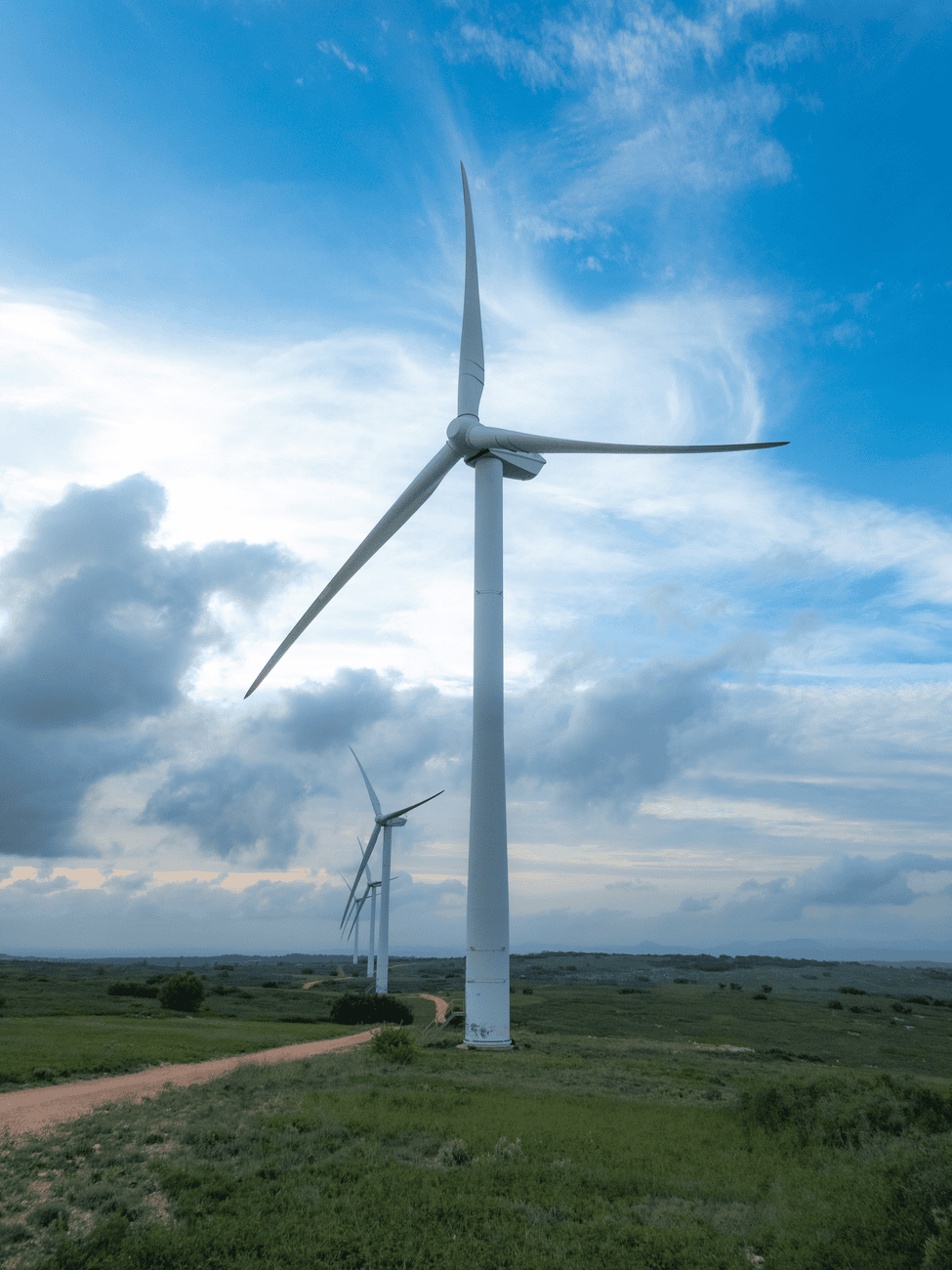
Wind is America’s largest renewable source, and 2026 is its strongest build year in five—plus a massive repowering wave as aging turbines turn over. This specialty E&S guide covers insuring wind contractors: erection, repowering, foundation, transport, and O&M. Learn why crane exposure, builder’s risk, and completed operations decide most claims, and how repowering stacks demolition onto erection risk. The right wind farm insurance is critical to any wind farm / turbine operation.
The Lift That Went Wrong
A wind contractor is mid-repower on a Great Plains site—pulling aging turbines and erecting larger modern machines in their place. On a windy afternoon, a nacelle lift is attempted just outside the crane’s chart limits to stay on schedule. The load shifts, the crane’s outriggers punch through soft ground, and a $2 million nacelle comes down hard. No one is hurt, but the machine is destroyed, the crane is damaged, the schedule slips weeks, and the developer starts asking who’s paying for the delay.
Now the questions cascade: Does the builder’s risk policy cover the dropped component, or does the installation floater? Is the crane a covered “rigging” exposure or an excluded one? Does the schedule slippage trigger a delay-in-startup claim the contractor never bought? Was the lift a workmanship issue that pulls in completed operations and professional liability? A single afternoon exposes every seam in a wind program that wasn’t built as one piece.
Wind construction is heavy, high, and unforgiving—and the exposures that generate its biggest claims (crane and erection, oversize component transport, foundation engineering, demolition on repowers) are precisely the ones a standard, admitted policy tends to exclude or misprice. This guide breaks down the wind contractors we insure, the wind-specific risk profile, the coverage lines that matter most, and state-by-state considerations across California, Texas, Alaska, New Mexico, Oklahoma, Pennsylvania, North Dakota, and Nevada. It’s a spoke off our broader alternative energy insurance guide, alongside our solar contractor insurance deep dive.
Quick Summary
- Wind has been the largest U.S. renewable source since 2019, with roughly 159 GW installed; 2026 is shaping up as the strongest build year in five years at around 11 GW of new capacity.
- The West leads 2026 connections (led by a 3.5 GW project in New Mexico), with the Midwest peaking in 2027 and Texas returning to the top in 2028.
- A massive repowering wave is underway—about 81 GW of turbines reach 15 years of age by 2035—combining demolition and new construction in single projects.
- Crane/erection, builder’s risk/inland marine, completed operations, and professional/E&O are the coverage drivers that most often decide a wind claim.
- FCIS Group places wind erection, repowering, foundation, transport, and O&M accounts across CA, TX, AK, NM, OK, PA, ND, and NV.
Table of Contents
The 2026 Wind Market: Building Against the Clock
Wind is the workhorse of U.S. renewables—the largest source of renewable electricity in the country since 2019, with roughly 159 gigawatts of utility-scale capacity in service entering 2026. After a strong 2025 that added around 8 GW (a nearly 50% jump year over year), developers are on track to add close to 11 GW in 2026, which would make it the biggest buildout year in five years.
The near-term map is regional. The West is set to dominate 2026 connections—well over half of new capacity—led by a single 3.5 GW project connecting in New Mexico. The Midwest is projected to peak in 2027 on projects in Illinois, Minnesota, and Iowa, and Texas is expected to return as the leading market in 2028. Analysts see roughly 48–50 GW of new wind through 2030, underpinned by a multi-gigawatt pipeline that has already cleared major commercial hurdles.
Two forces define the moment. First, the market is racing a policy clock: production-tax-credit deadlines and safe-harbor rules have concentrated developer effort on projects that can reach commercial operation inside the incentive window, pulling activity forward and putting a premium on contractors who can execute on schedule. Second, and more durably for contractors, is repowering. A very large fleet built in the late 1990s and 2000s is reaching the end of its design life—about 81 GW will hit 15 years of age by 2035—and upgrading those sites boosts output without new land or, often, new interconnection filings. Repowering already represents a large and growing share of activity, and it is some of the most specialized, insurance-intensive work in the sector.
Offshore wind remains a small operating base in the U.S. but is advancing through construction, with several gigawatts expected online by 2027 even amid significant federal-policy and permitting headwinds. For contractors, offshore is a different animal entirely—marine construction, specialized vessels, and maritime exposures that require their own markets.
Types of Wind Contractors We Insure
“Wind contractor” spans a wide range of specialized firms, and each sits at a different point on the risk curve.
Turbine Erection & Installation Contractors
The core high-hazard trade: assembling towers, nacelles, and blades using large cranes at extreme height. Crane and rigging operations dominate the exposure, and a single failed lift can produce catastrophic property and injury losses. These accounts live or die on documented lift plans, crane certifications, and completed-operations coverage.
Repowering & Decommissioning Contractors
Repowering firms combine demolition and new construction on the same site—removing aging turbines and blades, sometimes foundations, then erecting larger machines. That stacks demolition and disposal exposure on top of crane-heavy erection, and adds environmental considerations for old components and fluids. It’s the fastest-growing specialty in wind and one of the most complex to insure.
Foundation, Civil & BOP Contractors
Balance-of-plant, civil, and foundation contractors handle excavation, concrete, roads, and collection systems. Their exposure centers on ground disturbance and pollution, structural and geotechnical design, and completed operations on foundations that must support multi-hundred-ton machines for decades.
Component Transport & O&M Contractors
Blades, towers, and nacelles move as oversize loads over public roads, creating high-value transit and auto exposure. Operations-and-maintenance firms, meanwhile, work at height on live equipment, servicing gearboxes, blades, and electrical systems—an exposure profile dominated by completed operations, professional liability, and workers’ comp.
The Wind-Specific Risk Profile
Wind accounts land in the surplus lines (E&S) market because their claims cluster around a set of heavy-construction and high-value-equipment exposures that standard forms weren’t designed to carry. The table below summarizes them.
| Exposure | Why It Drives Wind Claims | Coverage Response |
|---|---|---|
| Crane & erection | Large lifts at height with tip-over and dropped-load potential; catastrophic outcomes. | GL + high excess/umbrella; documented lift plans & crane certs. |
| High-value components | Towers, nacelles & blades worth millions, staged and in oversize transit. | Builder’s risk (course of construction) + inland marine. |
| Oversize transport | Blades and towers move as oversize loads over public roads—high auto/transit risk. | Commercial auto + motor-truck-cargo / transit coverage. |
| Repowering / demolition | Removing old turbines stacks demolition & disposal risk onto erection. | Manuscript GL, CPL, and completed operations tuned to dual scope. |
| Foundation & design | Geotechnical and load errors surface long after commissioning. | Professional/E&O + completed operations. |
| Pollution | Ground disturbance plus nacelle oils, lubricants & hydraulic fluids. | Contractors pollution liability + onsite cleanup. |
| Schedule / delay | An incident on a tax-credit-driven schedule can trigger costly delay claims. | Delay-in-startup / soft costs within builder’s risk. |
The good news for well-run contractors: the sector is in execution mode, lenders are financing a large cleared pipeline, and disciplined risk management is rewarded. Documented crane and rigging controls, qualified crews, clean loss history, and clear contractual risk allocation translate directly into better pricing and terms.
Wind account standard markets keep declining?
We place turbine erection, repowering, foundation, transport, and O&M programs—crane, builder’s risk, completed ops, CPL, and bonds included.
Request a QuoteCoverage Lines for Wind Contractors
A wind program is built from the familiar specialty-contractor lines, but the weighting is distinctive: the excess/umbrella tower is larger to sit over crane work, builder’s risk and inland marine carry heavy limits for component values, and delay-in-startup coverage becomes a real consideration. Here’s the program at a glance.
| Coverage Line | What It Protects Against | Highest Priority For |
|---|---|---|
| GL + Completed Operations | Injury/damage during work and claims after commissioning | Every wind contractor |
| Excess / Umbrella | High limits above GL/auto to sit over crane & tower work | Erection & repowering firms |
| Builder’s Risk / Inland Marine | Towers, nacelles & blades in transit, staged & under construction | Erection, transport & EPC |
| Contractors Pollution (CPL) | Ground disturbance, nacelle fluids, spills & releases | Foundation, repowering & O&M |
| Professional / E&O | Foundation/load design, geotechnical & yield guarantees | EPC & design-build firms |
| Workers’ Compensation | Injury from work at height, heavy lifting & electrical | All crews; correct high-hazard codes |
| Commercial Auto + Transport | Fleet liability plus oversize-load and cargo exposure | Transport & mobile crews |
| Cyber Liability | Ransomware & breach on SCADA/monitoring systems | Operators & O&M providers |
| Surety Bonding | Bid, performance, payment & decommissioning bonds | Utility-scale & leased-land wind |
1 & 2. General Liability + Excess/Umbrella
GL with unrestricted completed operations is the foundation—foundation, tower, and electrical work generate claims long after commissioning. Because crane and erection outcomes can be catastrophic, wind contractors carry a larger excess/umbrella tower than most trades, sized to the lift exposure and to lender and contract requirements (frequently well into eight figures on utility-scale work).
3. Builder’s Risk / Inland Marine
Towers, nacelles, and blades are worth millions and spend real time in oversize transit and staged on site before erection. Builder’s risk (course of construction) and inland marine protect those values against transit and on-site loss—and lenders specifically require them. Watch the delay-in-startup / soft costs extension: on a tax-credit-driven schedule, a covered delay can dwarf the physical-damage loss.
4 & 5. Contractors Pollution + Professional/E&O
CPL covers ground disturbance during foundation work plus the oils, lubricants, and hydraulic fluids housed in nacelles and drivetrains—pollution conditions GL excludes. E&O answers for foundation and load design, geotechnical assumptions, and availability or yield guarantees. Our contractors pollution liability guide covers the CPL side in depth.
6 & 7. Workers’ Comp + Commercial Auto / Transport
Workers’ comp is driven by high-hazard class codes for work at height and heavy lifting, and multi-state crews face very different state environments (including monopolistic funds like North Dakota’s). Commercial auto plus oversize-load and motor-truck-cargo coverage addresses the reality that blades and towers travel public roads as high-value oversize loads.
8 & 9. Cyber + Surety Bonding
Cyber covers ransomware and breach exposure on SCADA and monitoring systems—most relevant to operators and O&M firms. Surety supports bid, performance, payment, and—importantly for wind—decommissioning bonds that guarantee turbine removal on leased, agricultural, or public land. We place commercial surety alongside the casualty program so the whole submission moves together.
State-by-State Wind Considerations
Wind underwriting turns on catastrophe exposure, resource geography, and each state’s labor and environmental environment. Here’s a quick orientation to our eight-state footprint.
| State | Wind Profile | Key Underwriting Factors |
|---|---|---|
| Texas (TX) | The nation’s #1 wind state; huge onshore fleet | Tornado/hail & convective-storm CAT; strong repowering pipeline; ERCOT merchant exposure |
| Oklahoma (OK) | Major wind market with deep operating base | Tornado-alley CAT; repowering activity; oil-and-gas labor overlap |
| New Mexico (NM) | Home to one of the largest projects now connecting | Large-project logistics; land use & tribal jurisdiction; transmission build-out |
| North Dakota (ND) | Per-capita wind leader; strong Plains resource | Cold-climate construction; monopolistic state WC fund; ag-land decommissioning bonds |
| California (CA) | Legacy wind (Altamont, Tehachapi); repowering focus; future floating offshore | Repowering/demolition risk; wildfire CAT; high WC costs; prevailing wage |
| Pennsylvania (PA) | Ridge-line onshore wind; repowering candidates | Terrain & access; organized-labor & prevailing-wage considerations |
| Nevada (NV) | Niche wind alongside solar & geothermal | Federal (BLM) land permitting; decommissioning bonding; remote logistics |
| Alaska (AK) | Remote and village-scale wind; microgrids | Extreme logistics; cold-climate & access; transport cost and seasonality |
For the full multi-sector view across these states, see the alternative energy insurance hub and our broader specialty contractor insurance capabilities.
Presenting a Wind Account to Underwriters
Wind submissions are won or lost on how the heavy-construction exposure is documented. In a market that’s in execution mode and financing a large cleared pipeline, a complete, well-controlled submission captures competitive terms; a thin one gets penalized or declined.
The strongest wind submissions include the application, current and expired loss runs, and a clear description of the work mix—erection, repowering, foundation/BOP, transport, or O&M. For erection and repowering, that means crane and lift documentation: crane certifications, written lift plans, rigging procedures, and the split between owned equipment and subcontracted crane services. Add component values and transport arrangements for the builder’s risk and inland marine, foundation and geotechnical engineering details for the professional exposure, and demolition and disposal plans on repowers. Safety records, crew qualifications, and financial statements complete the picture.
From there, we match the account to the right wholesale and specialty markets, negotiate manuscript terms where standard forms fall short—unrestricted completed operations, appropriate crane and rigging treatment, builder’s risk with a sensible delay-in-startup extension—and assemble the program so the lines fit together instead of leaving gaps at the seams. The dropped-nacelle scenario at the top of this guide is exactly what happens when builder’s risk, inland marine, the crane exposure, and delay coverage are bought in isolation. As a solo specialty producer, the broker who takes your submission is the one who works it start to finish.
Building a wind submission? Let’s get it market-ready.
Send the application, loss runs, work mix, and crane/lift documentation—we’ll structure the full program.
Talk to a SpecialistGrowth Outlook for Wind Contractors
The trajectory is solid even against real headwinds. Onshore wind is in a genuine buildout, the near-term pipeline has largely cleared its commercial hurdles, and corporate power-purchase agreements—including large deals tied to data-center demand—are sustaining procurement. Analysts see roughly 48–50 GW of new capacity through 2030, and the repowering opportunity extends well beyond it as the aging fleet turns over.
For contractors, the durable story is less about any single year’s additions and more about the shift from greenfield-only to a mix of new build, repowering, and long-tail O&M on a 159-plus-gigawatt installed base. That base guarantees decades of erection, service, and eventual decommissioning work. As projects get larger and lenders more demanding, bankable coverage becomes a condition of the job, documented crane and safety controls become a pricing lever, and completed-operations and contractor-stability questions sit at the center of every underwriting conversation. The firms that treat their insurance program as part of how they win financeable work will be the ones positioned to capture the pipeline as it lands.
Key Takeaways
- Wind is the largest U.S. renewable source (~159 GW installed); 2026 is the strongest build year in five years at ~11 GW.
- Repowering is the fastest-growing specialty—81 GW hits 15 years old by 2035—stacking demolition onto erection risk.
- Crane and erection is the defining hazard; wind contractors carry a larger excess/umbrella tower than most trades.
- Builder’s risk and inland marine (with delay-in-startup) protect multi-million-dollar towers, nacelles, and blades.
- CPL covers ground disturbance and nacelle fluids; professional/E&O covers foundation and load design.
- FCIS Group places wind erection, repowering, foundation, transport, and O&M accounts across CA, TX, AK, NM, OK, PA, ND, and NV.
Frequently Asked Questions
1. What insurance does a wind turbine erection contractor need?
Turbine erection contractors typically need general liability with strong completed operations, an excess/umbrella layer sized to crane and tower work, contractors pollution liability, professional/E&O where foundation or load engineering is involved, inland marine or builder’s risk for high-value components, workers’ comp with correct high-hazard class codes, commercial auto plus oversize-transport coverage, and surety bonds. Crane and rigging operations are the central underwriting focus.
2. Why is wind repowering a distinct insurance risk?
Repowering combines demolition and new construction on the same site—removing aging turbines, blades, and sometimes foundations, then erecting larger modern machines. That doubles the risk categories in one project: demolition and disposal exposure, crane-heavy erection, and completed-operations tail on the new equipment. With a large fleet reaching the end of its design life, repowering is one of the fastest-growing and most specialized parts of the market.
3. Do wind contractors need builder’s risk or inland marine?
Almost always. Towers, nacelles, and blades are extremely high-value and spend significant time in oversize transport and staged on site before erection. Builder’s risk (course of construction) and inland marine protect that property against transit and on-site loss—an exposure standard GL and auto policies don’t address, and one lenders specifically require.
4. How does crane and rigging exposure affect wind farm insurance?
Crane operations are the defining hazard of turbine erection—large lifts at height, tip-over potential, and catastrophic property and injury outcomes if a lift fails. Underwriters scrutinize crane certifications, lift plans, rigging practices, and subcontractor arrangements, and the excess/umbrella tower is sized accordingly. Documented crane and safety controls directly drive pricing and terms.
5. Does general liability cover a wind contractor’s completed work?
Only if products-completed operations coverage is included and not restricted. Foundation, tower, and electrical work can generate claims long after commissioning, so completed operations is a critical GL feature for wind contractors. Confirm it isn’t excluded or sub-limited before binding.
6. Do wind farm contractors need contractors pollution liability (CPL)?
Yes. Foundation excavation and ground disturbance, plus the oils, lubricants, and hydraulic fluids housed in nacelles and drivetrains, create pollution exposure that standard GL excludes. CPL covers third-party bodily injury, property damage, and cleanup from spills and releases during construction, repowering, and O&M.
7. What professional liability exposure do wind contractors have?
E&O responds to the professional side of the work—foundation and structural design, load calculations, geotechnical assumptions, and energy-yield or availability guarantees. Design-build and EPC wind firms carry it because general liability excludes losses arising from professional services.
8. Is offshore wind insurance different from onshore?
Substantially. Offshore adds marine construction, specialized installation vessels, Jones Act and maritime employment exposures, weather-driven delay, and far higher component and logistics values. While the U.S. offshore base is still small, projects are advancing, and these accounts require marine-specific markets and bespoke terms well beyond a standard onshore program.
9. Which states have the most wind contractor activity?
Texas leads U.S. wind, with Oklahoma, North Dakota, and New Mexico all major markets—New Mexico is home to one of the largest projects currently connecting. California, Pennsylvania, and other states add repowering and niche activity, and Alaska supports remote and village-scale wind. We place wind contractor accounts across all eight states in our footprint.
10. Do wind projects require surety or decommissioning bonds?
Frequently. Utility-scale wind projects require bid, performance, and payment bonds, and decommissioning bonds are commonly mandated—especially on leased, agricultural, or public land—to guarantee turbine removal at end of life. We place commercial surety alongside the casualty program.
Let’s place your wind contractor account.
Turbine erection, repowering, foundation/BOP, transport, and O&M firms across CA, TX, AK, NM, OK, PA, ND, and NV. Talk directly with a specialty broker who works your submission start to finish.
Contact Steve McClure Request a QuoteCrescenta Valley Insurance / FCIS Group | CA License 0G58010 | Call: [PHONE]
Sources & Further Reading
| Source | Topic |
|---|---|
| American Clean Power / Wood Mackenzie | U.S. Wind Energy Monitor, Q2 2026 |
| Wood Mackenzie | 2026 installations nearly double; 48 GW through 2030 |
| Electrek | U.S. wind comeback & 2026 regional outlook |
| CleanTechnica | Installed base & policy pressure (EIA data) |
| reNEWS | Construction surge & the 81 GW repowering opportunity |
| MarketsandMarkets | Onshore wind market size & forecast |
| Mordor Intelligence | U.S. wind market, turbine scale & offshore |
| Airswift | Major U.S. wind projects, jobs & offshore status |
| Brown & Brown | 2026 energy & infrastructure insurance outlook |
| Risk & Insurance | Renewable energy underwriting trends |
This article is for informational purposes only and does not constitute an offer of insurance or a policy. Coverage is subject to underwriting, policy terms, conditions, and exclusions. CVI, CA License 0G58010.

- Directional Drilling Contractor Insurance: HDD & Fiber Guide
- Pennsylvania Welding Contractor Insurance for Foundry, Mill & Structural Work.
- How to get Agriculture Environmental Insurance?
- Asbestos Abatement Contractor Insurance: California C-22 Guide
- Battery Storage (BESS) Insurance


Leave a Reply