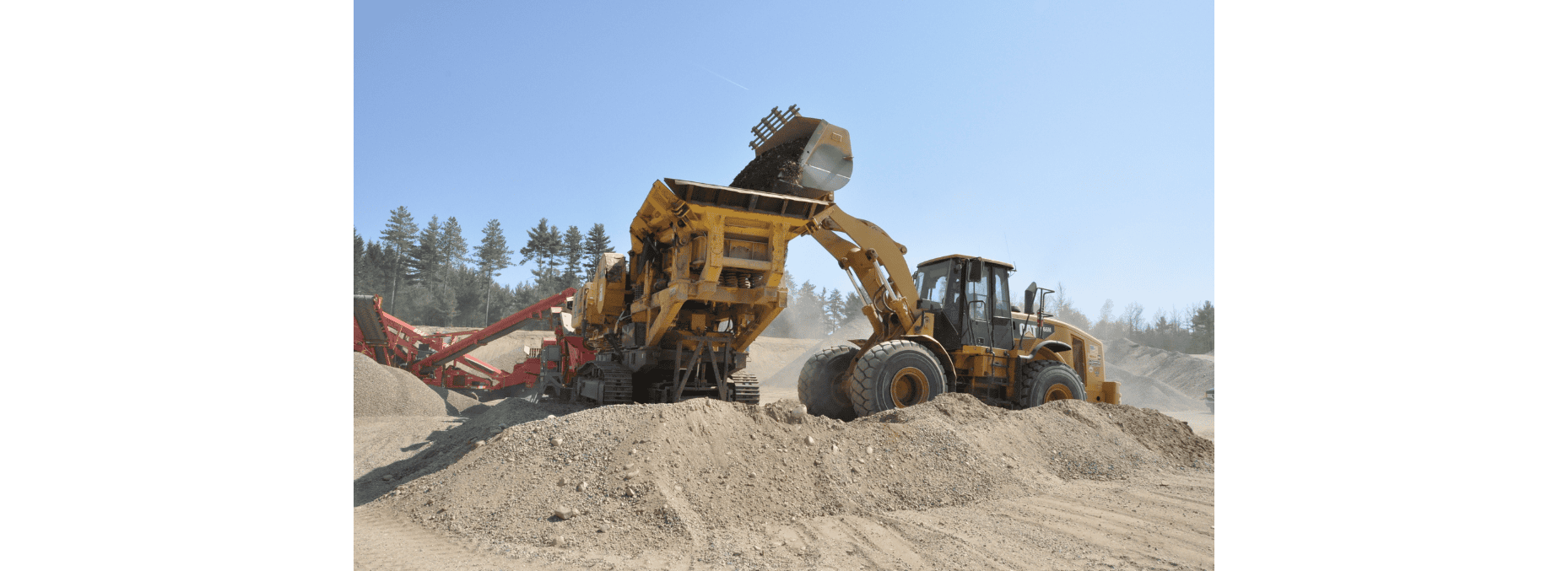
Nevada’s mining boom is drawing hundreds of contractors onto mine sites—but most standard GL policies exclude mine-site work, leaving them uninsured at the gate. This guide covers the exclusion trap, MSHA contractor requirements, prime-contract demands, and the E&S coverage drilling, blasting, earthwork, and hauling contractors need. Crescenta Valley Insurance places it.
Nevada Mining Insurance Series • Spoke Guide
Nevada Mining Contractors Insurance: MSHA-Compliant Coverage for Drillers, Blasters & Site Contractors
Quick Summary
Nevada’s mining industry generated roughly $10.1 billion in commodity value in 2024, and a lithium build-out is drawing hundreds of contractors onto mine sites statewide. Here’s the catch: most standard general liability policies exclude work performed at a mine, leaving contractors uninsured the moment they enter the property. Add MSHA jurisdiction and demanding prime-contract requirements, and mining contractors become a surplus lines (E&S) risk. This guide explains the mine-site exclusion, the coverage lines contractors actually need, and how Crescenta Valley Insurance structures compliant programs.
Key Takeaways
- Standard GL policies commonly exclude mine-site operations—a contractor relying on ordinary coverage may have no protection at a mine.
- Under the federal Mine Act, contractors working at a mine are treated as operators subject to MSHA, requiring a Contractor ID and Part 46/48 training.
- Mine operators typically require $5M–$10M+ limits, additional-insured status, primary/non-contributory wording, and waivers of subrogation.
- Drilling, blasting, earthwork, hauling, exploration, and reclamation contractors each carry distinct exposures that E&S carriers underwrite differently.
- CVI places GL that covers mine-site work, plus workers’ comp, auto, equipment, contractors pollution, and excess—structured to the operator’s contract.
Table of Contents
- Nevada’s Mining Boom Is a Contractor’s Market
- Why Mining Contractors Need Specialty (E&S) Insurance
- Core Coverage Lines for Nevada Mining Contractors
- Contract Requirements: What the Mine Operator Demands
- Coverage by Contractor Type
- How CVI Places Mining Contractor Coverage
- Frequently Asked Questions
If you drill, blast, haul, excavate, or build at Nevada mine sites, your insurance problem is different from that of an ordinary contractor—and more dangerous, because the gap is usually invisible until a claim. This guide walks through why mining contractors fall into the surplus lines market, what mine operators and MSHA require, and how to structure a program that actually responds on a mine property.
Nevada’s Mining Boom Is a Contractor’s Market
Nevada is one of the most active mining jurisdictions in the world. According to the Nevada Division of Minerals, the state’s mining industry recorded roughly $10.1 billion in total commodity value in 2024—up 5.7% year over year—with gold and silver driving about 84% of that total. The USGS Mineral Industry of Nevada program tracks more than 20 commodities produced across roughly 100 mines statewide, and the sector directly employs over 14,500 people at some of the highest average wages in the state.
On top of that established base, a critical-minerals build-out is underway—led by the lithium projects detailed in our Nevada lithium mining insurance guide—that is pulling drilling, earthwork, mechanical, and hauling contractors onto sites across Humboldt, Esmeralda, and Elko counties. Every one of those contractors needs coverage that most of them don’t have.
Why Mining Contractors Need Specialty (E&S) Insurance
Two forces push mining contractors out of the standard market and into surplus lines: a policy exclusion most contractors don’t know they have, and a federal regulatory status that makes standard carriers nervous.
The Mine-Site Exclusion Trap
This is the single most important thing a Nevada mining contractor can understand: most standard-market general liability policies exclude operations performed at a mine or mine site. A contractor who wins a job at a gold mine or lithium project, assuming their existing GL simply follows them, can be entirely uninsured the moment they pass through the gate. The exclusion is often buried and rarely flagged at renewal. When a loss happens on mine property, the denial arrives after the fact—when it’s too late to fix. Coverage that affirmatively includes mine-site work is written in the E&S market by carriers who underwrite the exposure on purpose.
The MSHA Dimension
Under the federal Mine Act, an independent contractor performing service or construction at a mine is treated as an operator—and falls squarely under the jurisdiction of the Mine Safety and Health Administration (MSHA). That means a contractor must obtain an MSHA Contractor ID (Form 7000-52) and ensure workers complete the applicable Part 46 or Part 48 safety training. The boundary between MSHA and OSHA jurisdiction at mine sites is defined by interagency agreement. This regulated status, combined with the severity of mining operations, is exactly why underwriters treat mining contractors as a specialty class rather than a standard one. The same E&S logic that governs mine operators—detailed in our Nevada gold mining insurance guide—extends to the contractors who serve them.
Core Coverage Lines for Nevada Mining Contractors
A compliant program for a Nevada mining contractor generally stacks the following lines:
| Coverage Line | What It Protects Against |
|---|---|
| General Liability (mine-site inclusive) | Third-party bodily injury and property damage from operations at the mine—written without the standard mine-site exclusion. |
| Workers’ Compensation | Statutory benefits for crews performing high-hazard work; mining classifications carry elevated rates. |
| Commercial Auto / Fleet | Haul trucks, water trucks, service vehicles, and equipment transport on and off remote mine roads. |
| Contractors Equipment / Inland Marine | Owned, leased, and rented drills, dozers, loaders, and mobile equipment against damage and theft. |
| Contractors Pollution Liability | Releases arising from the contractor’s operations—fuel, fluids, drilling additives, and disturbed material. |
| Umbrella / Excess Liability | High-limit protection above GL, auto, and employers’ liability to meet operator contract thresholds. |
| Explosives / Blasting Endorsements | Specialized coverage for blasting contractors, where standard forms exclude explosives entirely. |
For contractors whose work spans reclamation and closure, surety and bonding often sit alongside these lines—see our guide to Nevada mining reclamation bonds.
Bidding a job at a Nevada mine?
Before you sign, make sure your GL actually covers mine-site work. CVI places contractor coverage that responds on the property—and meets the operator’s certificate requirements.
Call 818-974-8117Contract Requirements: What the Mine Operator Demands
Mine operators transfer risk to their contractors aggressively, and the certificate of insurance (COI) is where it happens. A typical Nevada mine contract will require the contractor to:
- Carry combined GL and umbrella limits of $5 million to $10 million or more, depending on scope.
- Name the mine operator (and often the property owner and prime contractor) as an additional insured.
- Provide primary and non-contributory wording, so the contractor’s policy pays first.
- Include a waiver of subrogation in the operator’s favor.
- Maintain workers’ compensation, commercial auto, and—increasingly—contractors pollution liability.
A standard-market policy with a mine-site exclusion can’t satisfy these terms honestly, even if the certificate looks correct on paper. When the underlying policy wouldn’t respond to a mine-site loss, the additional-insured protection the operator is counting on is illusory. This is the gap a specialty broker closes before the contract is signed—not after a claim.
Coverage by Contractor Type
Different mining trades carry different exposures, and underwriters price them accordingly:
Drilling & Exploration Contractors
Core drilling, RC drilling, and geotechnical work involve high-value rigs (equipment coverage), downhole and fluids exposure (pollution), and remote-site auto risk. Exploration firms working ahead of permitting need coverage that travels across claims and public land.
Blasting & Explosives Contractors
Blasting is one of the hardest classes to place. Standard forms exclude explosives outright, so these contractors need purpose-built E&S GL with explosives coverage, high excess limits, and careful attention to storage and transport exposures.
Earthwork, Excavation & Site Contractors
Grading, haul-road construction, and site prep bring heavy mobile equipment and disturbance-related pollution risk. These overlap heavily with the broader trades covered in our specialty contractor insurance overview—but the mine-site exclusion changes the analysis entirely.
Hauling & Trucking Operators
Ore and material haulers face concentrated commercial auto exposure on unimproved mine roads, plus cargo and equipment considerations. Fleet structure and radius of operation drive the placement.
Environmental & Reclamation Contractors
Closure, remediation, and reclamation work is pollution-forward by nature and almost always requires contractors pollution liability alongside GL. Similar principles apply across the West—see our Wyoming mining insurance guide for a neighboring-state comparison.
How CVI Places Mining Contractor Coverage
Crescenta Valley Insurance is a surplus lines brokerage built for exactly this problem—the risks standard markets decline across mining, energy, environmental, and specialty contracting. We work directly with the E&S wholesalers who underwrite mine-site exposures, so the GL we place responds on the property instead of quietly excluding it. Surplus lines placements in Nevada are transacted under the oversight of the Nevada Division of Insurance, and where a contractor’s operations touch environmental regulation, the Nevada Division of Environmental Protection sets the standards that shape pollution exposure.
Whether you’re a single drilling rig bidding your first mine contract or an established site contractor scaling up for the lithium build-out documented by the USGS critical-minerals program and operators like Lithium Americas at Thacker Pass, we can build a program that matches the exposure and satisfies the certificate. Industry context on the state’s trajectory is tracked by The Nevada Independent.
Get a Mining Contractor Coverage Review
Send us your current policy and the operator’s insurance requirements. We’ll tell you where the gaps are—and what it takes to close them.
Email steve@cvins.comStephen McClure, Principal Broker • CA Lic. 0G58010 • Crescenta Valley Insurance
Frequently Asked Questions
Why won’t a standard general liability policy cover a mining contractor?
Most standard-market GL policies contain an exclusion for operations performed at a mine or mine site. A contractor who assumes their existing GL follows them onto a mine property is often uninsured the moment they drive through the gate. Coverage for mine-site work is written in the E&S market by carriers who specifically underwrite mining exposures.
Are mining contractors regulated by MSHA?
Yes. Under the federal Mine Act, an independent contractor performing service or construction at a mine is treated as an operator and falls under MSHA jurisdiction. Contractors must obtain an MSHA Contractor ID (Form 7000-52) and ensure their workers complete Part 46 or Part 48 safety training. This regulatory status is one reason standard carriers avoid the class.
What insurance limits do Nevada mine operators require from contractors?
Requirements vary by operator and scope, but mine operators commonly require GL and umbrella limits totaling $5 million to $10 million or more, name the operator as an additional insured, provide primary and non-contributory wording, include waivers of subrogation, and carry workers’ compensation, commercial auto, and often contractors pollution liability.
What types of mining contractors need this coverage?
Drilling contractors, blasting and explosives contractors, earthwork and excavation contractors, haul-truck and trucking operators, exploration and geotechnical firms, environmental and reclamation contractors, and mechanical, electrical, and fabrication subs all need mine-site-specific coverage. Any contractor performing service, construction, or hauling at a Nevada mine falls into this category.
Does Crescenta Valley Insurance place coverage for Nevada mining contractors?
Yes. CVI is a surplus lines brokerage specializing in mining and energy risks across Nevada and the West. We place general liability that covers mine-site operations, workers’ compensation, commercial auto, contractors equipment, contractors pollution liability, and excess/umbrella limits structured to satisfy the operator’s contract requirements.
This article is for general informational purposes and does not constitute a binding offer of coverage or insurance advice. Coverage availability, terms, and limits depend on underwriting and the specifics of each risk. Contact Crescenta Valley Insurance to discuss your operation.
- Directional Drilling Contractor Insurance: HDD & Fiber Guide
- Pennsylvania Welding Contractor Insurance for Foundry, Mill & Structural Work.
- How to get Agriculture Environmental Insurance?
- Asbestos Abatement Contractor Insurance: California C-22 Guide
- Battery Storage (BESS) Insurance


Leave a Reply